
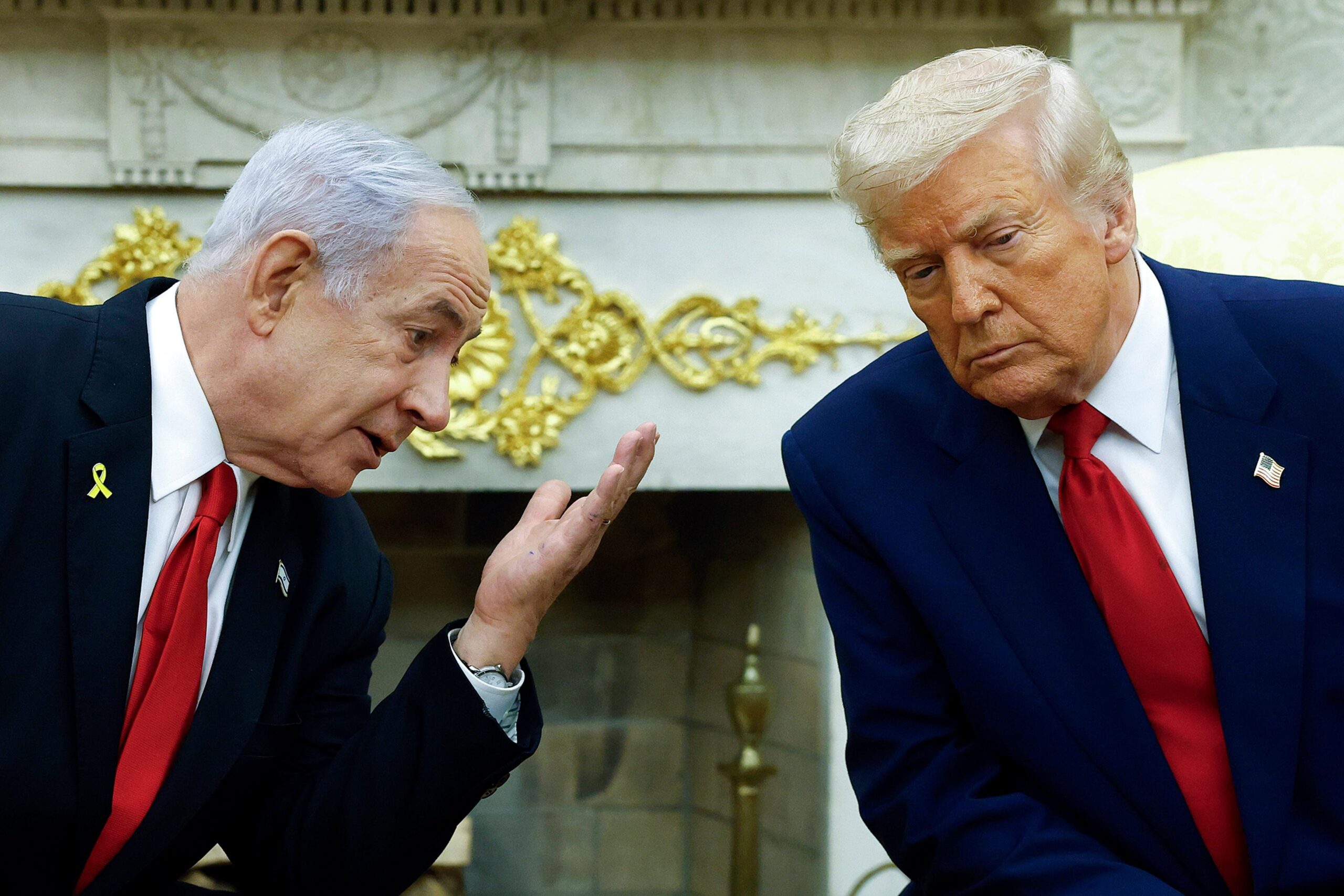
Donald Trump publically attcked Benjamin Netanyahu in a social media post following the US-Iran peace deal. Trump claimed that Israeli airstrikes in Lebanon seemed to have postponed the signing of a peace agreement between the United States and Iran.
Mr. Trump stated that the Strait of Hormuz would be “open to all” as soon as the framework agreement is completed on Sunday, US local time.
Iran’s red line
Responding to Israel’s recent strike on southern Beirut, the secretary of Iran’s top security body, Mohammad Bagher Zolghadr, warned that a response was forthcoming. In a statement carried by Iranian media, he described Lebanon as Iran’s “lifeblood” and said that any violation of the Islamic Republic’s red lines would not go unanswered.
Iran has consistently argued that any agreement with the United States must also address the conflict in Lebanon, viewing the issue as closely tied to broader regional stability. Tensions between Iran and Israel remain high following their exchange of strikes on 7–8 June, marking the most serious escalation since the ceasefire that took effect in April.
The thaw in US-Israel relations
Donald Trump wrote on X that Israeli strikes on Beirut “should not have happened, particularly on a special day when we are so close to a Peace Deal with Iran.”Israel has the right to defend itself against threats, but it shouldn’t interfere with this crucial process because the attack it was reacting to was insignificant and had no fatalities.
The attack comes at a time when the US-Israel relations are already strained. Trump further reiterated: “There should be no more attacks by Israel anywhere in Lebanon, but there should also be no more attacks by any other party, including Hezbollah, against Israel.” Trump called Netanyahu “a very difficult guy” and asserted that he “should be very thankful” to the US for negotiating the agreement, “because if Iran had a nuclear weapon, Israel wouldn’t be around for two hours.”
The public criticism directed at Israeli Prime Minister Benjamin Netanyahu by U.S. President Donald Trump highlights a noticeable cooling in what has traditionally been one of Washington’s closest strategic partnerships. Trump’s remarks, made in response to Israeli airstrikes in Lebanon during a sensitive phase of U.S.-Iran negotiations, suggest growing frustration within the White House over actions that could complicate broader regional diplomatic efforts. This public disagreement reflects deeper tensions that have surfaced in recent months and signals a more complex phase in U.S.-Israel relations, where strategic alignment can no longer be taken for granted.
What’s in the deal?
Iran and the United States claim to have achieved a deal that will go into force on Friday. The deal includes the following key points:
- US ending naval blockade of Iranian ports,
- Reopening of the Strait of Hormuz
- Release of frozen assets
- Toll-free transit through the Strait of Hormuz
- Iran to halt further Uranium enrichment
- Stopping war at all fronts including Lebanon
Following a signing ceremony on Friday, the US and Iran have given divergent interpretations of what will happen next. An American official has denied Iran’s deputy foreign minister’s assertion that talks will start after the US releases billions in frozen cash. Nonetheless, both the parties agree that the ceasefire is in effect.

Israel’s response
Netanyahu directly rejects the Lebanon clause of the US-Iran agreement announced by Pakistan, telling Trump the IDF will not withdraw from Lebanon and that Israel does not consider itself bound by the clause, per Maariv. Prior to the announcement of the deal, Israeli soldiers carried out airstrikes on Beirut earlier on Sunday.
The emerging agreement has sparked strong criticism in Israel, where many officials and analysts are concerned that the proposed terms do not require Iran to limit its ballistic missile program or end its support for regional groups such as Hezbollah.
Tensions have remained high since Hezbollah launched missiles into Israel on 2 March, shortly after U.S. and Israeli strikes on Iran that reportedly killed Iranian Supreme Leader Ali Khamenei. Since then, Israeli forces have expanded their military operations deeper into Lebanon than at any point in the past 25 years.
The reaction within Israel has been particularly critical. Writing in the newspaper Maariv, commentator Avi Ashkenazi described the proposed deal as “a colossal failure,” arguing that Iran had emerged as the clear beneficiary. Similarly, former Israeli national security adviser Jacob Nagel called the draft agreement “a big mistake,” reflecting broader concerns among Israel’s security establishment.
Shifting priorities
The emerging U.S.-Iran framework agreement points to a very volatile turning point for Middle Eastern geopolitics. The argument between Trump and Netanyahu underscores a deep fissure in the ironclad U.S.-Israel alliance. Trump is celebrating the impending deal and the re-opening of the critical Strait of Hormuz as a major diplomatic win, but Netanyahu is under furious domestic fire for being cut out of the negotiations, with his security services considering the deal a dangerous sellout leaving Iran’s regional proxies and ballistic missiles untouched. In the coming days, the question will be whether this fragile ceasefire can really hold, or whether the deep-rooted hostilities between Israel, Lebanon and Iran will ultimately shatter the White House’s diplomatic ambitions.
Related Stories:
US House votes to end Iran war
Donald Trump Gifted Nobel Peace Prize
Pakistan declares Netanyahu a “terrorist”