

14 Latin American country legislators commit to bolstering ties with Israel in the latest Latin America Chairman Conference in Buenos Aires through the Isaac Accords. According to organizers, participating countries included Brazil, Argentina, Venezuela, Ecuador, Colombia, Honduras, Chile, Costa Rica, Guatemala, Paraguay, Uruguay, Bolivia, and Panama.
Israel’s Initiative to Strengthen Ties
Major shift in Latin America’s foreign policy with Israel as countries sign initiative at Buenos Aires summit.New diplomatic initiative is gaining traction among conservative political leaders across Latin America, with supporters calling for the implementation of the Isaac Accords to expand cooperation between Israel and countries throughout the region.
Launched in late 2025 and clearly based on the Abraham Accords mediated by the United States, the Isaac Accords seek to establish a formal framework for collaboration between Latin American countries and Israel in the areas of trade, technology, investment, security, and cultural interaction. In contrast to the Abraham Accords, which formalized diplomatic recognition between Israel and a number of Arab states, the Isaac Accords focus on nations that, in many cases, already have formal relations with Israel; the objective is to strengthen and formalize those ties at a time when the region’s politics regarding Israel have become increasingly divisive.
Almost all of the initiative’s current momentum has come from the political right. While newly elected or aspiring conservative leaders in Chile, Peru, Colombia, and Brazil have indicated varying degrees of support, Argentina’s Javier Milei has established himself as its most outspoken supporter. A series of upcoming elections throughout the region will probably determine whether that support results in a long-lasting regional framework or stays limited to opposition and right-leaning governments.
Here’s where some of these countries stand:
1. Milei positions Argentina at the forefront

Argentine President Javier Milei has emerged as the initiative’s strongest political supporter. Since taking office, Milei has consistently reinforced Argentina’s ties with Israel, describing the country as one of his government’s closest strategic partners. His administration has expanded bilateral cooperation and reiterated plans to relocate Argentina’s embassy to Jerusalem. Milei dedicated his $1 million Genesis Prize to establishing a nonprofit organization to strengthen ties between Latin America and Israel and support the implementation of the Isaac Accords.
2. Colombia’s opposition pledges diplomatic reset
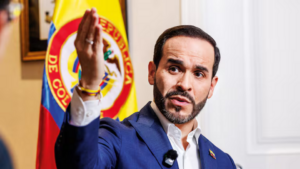
Support for the initiative has also surfaced in Colombia, where presidential hopeful Abelardo de la Espriella has pledged to restore diplomatic relations with Israel if elected. According to The Media Line, de la Espriella intends to reverse the deterioration in bilateral ties under President Gustavo Petro by rebuilding political dialogue and security cooperation. His proposed agenda also includes withdrawing Colombia’s intervention in South Africa’s genocide case against Israel at the International Court of Justice (ICJ) and introducing reciprocal visa-free travel between the two countries. His remarks come as Colombia prepares for a presidential transition that could significantly alter its foreign policy toward Israel.
3. Kast backs closer Chile-Israel cooperation

Chilean President José Antonio Kast has moved swiftly to restore ties with Israel, marking a sharp departure from the foreign policy of his predecessor, Gabriel Boric. During a meeting with Israeli President Isaac Herzog in Costa Rica, Kast announced that Chile would return its ambassador to Israel, reversing the diplomatic freeze imposed under the previous administration. His government has also pledged to renew cooperation in technology, artificial intelligence, healthcare and agriculture, while lifting restrictions that barred Israeli defense companies from participating in Chile’s FIDAE aerospace exhibition. Kast has repeatedly criticized Boric’s handling of relations with Israel, including the withdrawal of diplomatic staff and the exclusion of Israeli firms from defense expos.
4. Peru’s Fujimori advocates deeper bilateral partnership

Peruvian President Keiko Fujimori has also pledged to strengthen ties with Israel. Ahead of taking office, she held talks with Israeli Foreign Minister Gideon Sa’ar, with both sides reaffirming their commitment to expanding bilateral cooperation in agriculture, water management, cybersecurity and technology. Fujimori also proposed technical meetings between the two countries’ foreign ministers and cabinet officials to advance collaboration after her inauguration.
5. Flávio Bolsonaro reaffirms support for Israel in Brazil
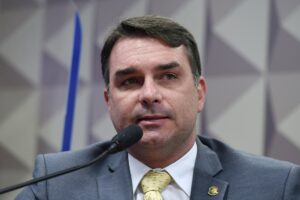
Meanwhile, in Brazil, Senator Flávio Bolsonaro, son of former President Jair Bolsonaro, has continued advocating for closer relations with Israel despite President Luiz Inácio Lula da Silva’s increasingly critical stance toward the Israeli government. Bolsonaro has maintained that Brazil should rebuild the strategic partnership established during his father’s presidency.
6. Venezuela’s shifting stance

Venezuela’s shifting stance has also attracted attention after Vice President Delcy Rodríguez publicly received Israeli representatives involved in earthquake relief operations. The meeting sparked speculation over whether Caracas may be softening its traditionally hostile position toward Israel. While no formal policy changes have been announced, the humanitarian engagement has fueled debate over the future direction of Venezuela’s diplomatic posture.
Representatives from other countries in attendance at the 3-day Buenos Aires summit included:
7. Bolivia
8. Ecuador
9. El-Salvador
10. Honduras
11. Panama
12. Guatemala
13. Paraguay
14. Costa Rica
Regional Divisions
The initiative has also drawn support from Jewish organizations and business leaders seeking to expand Israeli investment and technological partnerships across Latin America. Its proponents argue that cooperation in sectors such as cybersecurity, water management, agriculture, artificial intelligence and healthcare presents significant opportunities for both Israel and participating Latin American countries.
Despite growing backing among conservative politicians, the initiative enters a politically divided region. Several Latin American governments have adopted more critical positions toward Israel over the past two years, particularly in response to the war in Gaza, resulting in diplomatic tensions and, in some cases, downgraded relations.
The Future for Bilateral Relations
Supporters of the Isaac Accords nevertheless argue that changing political leadership across the region presents an opportunity to reset relations with Israel. Upcoming elections in countries including Colombia, Chile and Brazil are expected to shape whether the initiative gains broader governmental backing or remains largely championed by opposition figures.
While the Isaac Accords are still in their early stages, the endorsements from prominent conservative leaders signal a growing effort to institutionalize Israel-Latin America relations beyond individual governments. Whether the initiative develops into a broader regional framework will likely depend on future electoral outcomes and the evolving geopolitical priorities of Latin America’s next generation of leaders.
Related Stories:
Venezuela Faces Protests Amid Election Uncertainty