

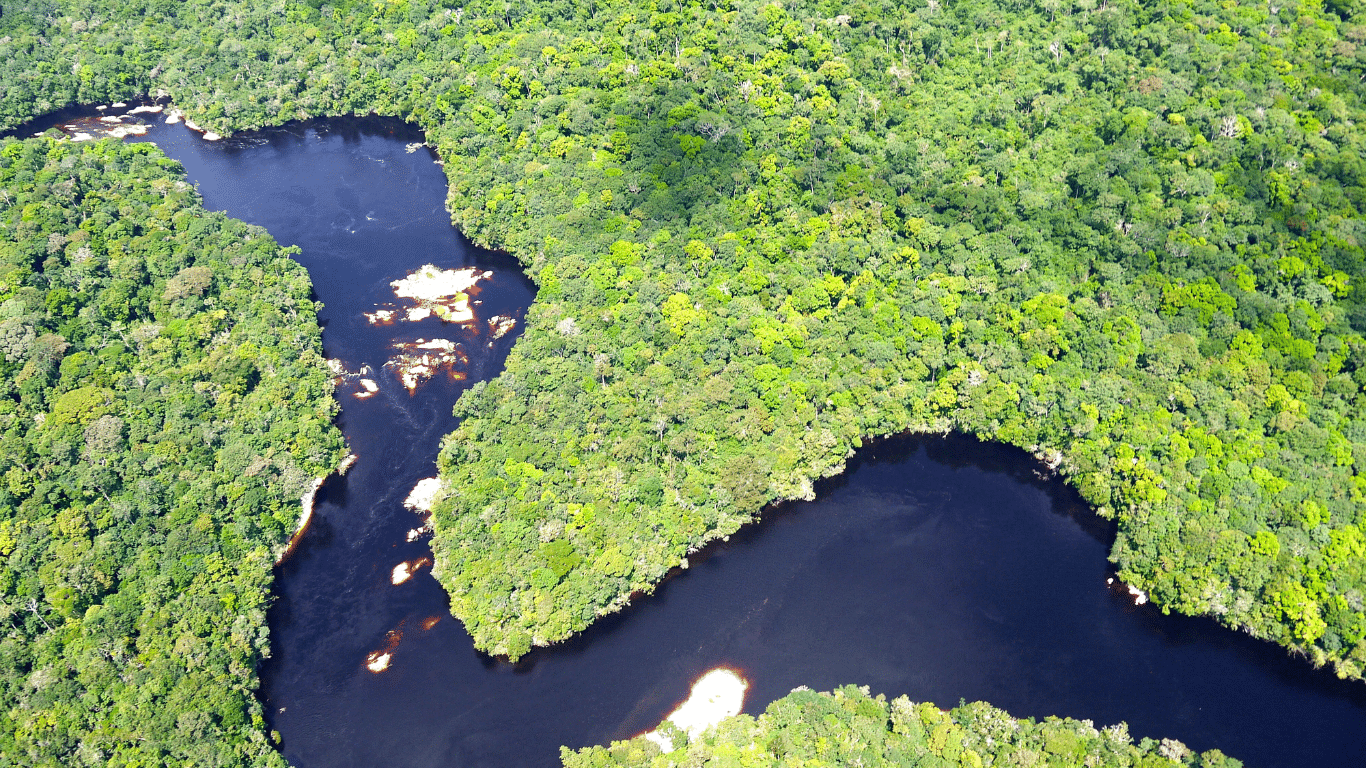
Colombia will no longer greenlight new oil or large-scale mining operations within its Amazon biome. The restriction covers a massive 42% of the country’s territory, according to a statement released by the environment ministry on November 13. The ban spans six Amazonian departments: Amazonas, Caquetá, Guaviare, Guainía, Putumayo, and Vaupés covering about 42% of Colombia’s continental landmass.
Government’s take
Acting Environment Minister Irene Vélez Torres announced that the entire Colombian Amazon will now be designated as a reserve for renewable natural resources. The declaration was made during a ministerial meeting with the Amazon Cooperation Treaty Organization at COP30, the U.N. climate summit hosted in Belém, Brazil. “This declaration is an ethical and scientific commitment. It seeks to prevent forest degradation, river contamination and biodiversity loss that threatens the continent’s climate balance,” Vélez said.
A Call for Regional Unity
While Colombia controls just 7% of the Amazon biome, Minister Vélez urged neighboring countries to implement similar safeguards. Currently, there are 871 oil and gas blocks stretching across the entire Amazon—an area roughly double the size of France—with 68% of them still in the research or bidding stages. “We do this not only as an act of environmental sovereignty, but as a fraternal call to the other countries that share the Amazon biome, because the Amazon does not know borders and its care requires us to move forward together,” Vélez added.
However, other Amazonian nations are moving in a very different direction:
-
Brazil: Despite successfully curbing deforestation, Brazil has recently auctioned off oil blocks near Indigenous territories and approved offshore drilling at the mouth of the Amazon River.
-
Peru: The government is actively courting foreign oil firms to revive production at Lot 192, a massive crude oil site in the northern Amazon.
-
Ecuador: Plans are underway to auction off 49 oil and gas projects valued at over $47 billion, despite ongoing public protests.
Challenging Corporate Overreach
Within Colombia, the new policy effectively halts 43 oil blocks and 286 mining requests that have not yet broken ground. According to the environment ministry, stopping these developments is critical, noting that “their activation could put the climate balance of the continent at risk.”
At a separate COP30 event, Vélez took aim at international legal mechanisms that permit corporations to sue governments over financial losses tied to environmental regulations, arguing that it compromises state sovereignty. She pointed out that these legal frameworks make it incredibly difficult for countries to phase out existing extractive industries without incurring crippling financial penalties.
Redefining Conservation for the Future
Thus, the move underscores a growing push to protect the region’s biodiversity for generations to come, balancing human activity with ecological survival. “Future generations must be able to find nature in a healthy state, the way we have known it,” María Soledad Hernández, coordinator of the sustainability program with the Colombia-based Amazonian Institute for Scientific Research, said in a video statement.
“Talking about conservation does not mean talking about not making use of it. Talking about conservation means being sustainable, being responsible and having activities that are balanced and in harmony with nature,” she added.
Related Stories:
Mass protests rise in Latin America
Colombia Appoints First Ambassador to Palestine Amid Gaza Crisis