

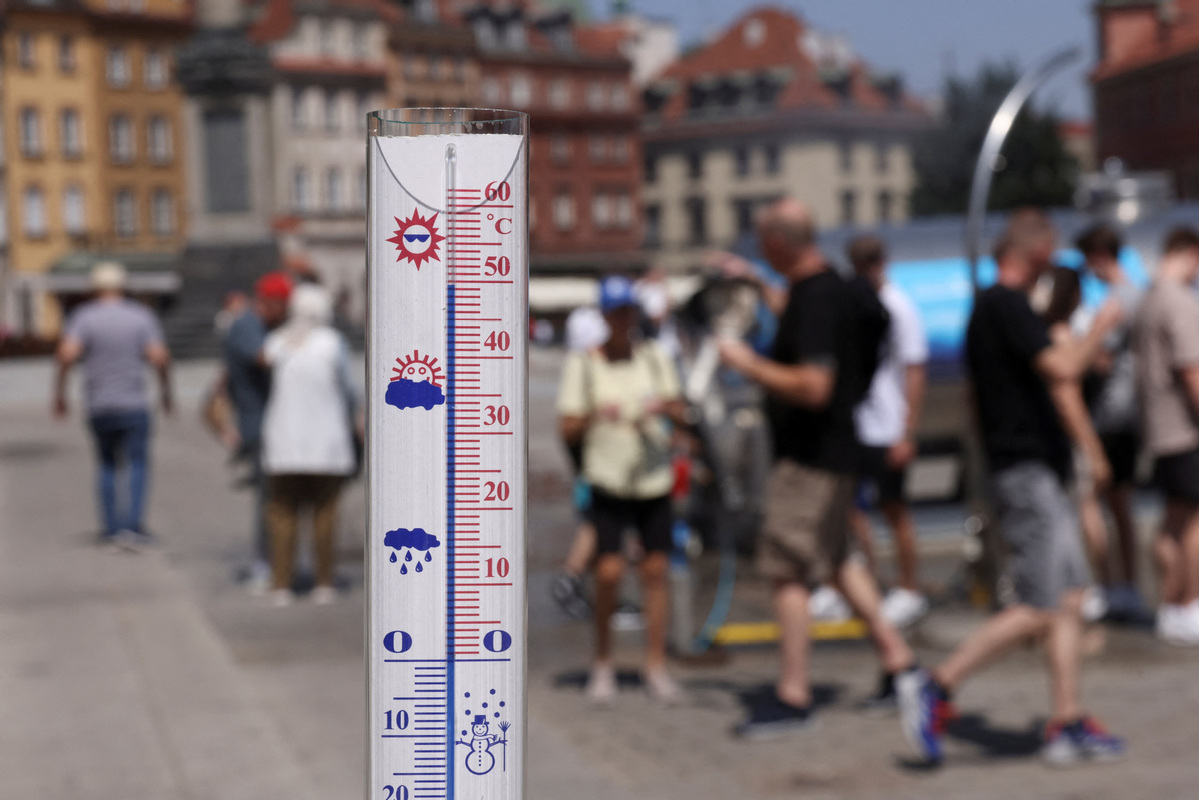
A relentless, record-breaking heatwave is roasting Europe, prompting the World Health Organization (WHO) to report over 1,300 excess deaths since June 21. Tens of millions of people are enduring dangerous, extreme temperatures as the deadly weather system pushes eastward, forcing local health services to the brink of saturation.
The Scale of the Heatwave
French health officials reported approximately 1,000 more deaths than expected in just a four-day span starting last Wednesday. The Czech Republic shattered national weather records by reaching 41.1 °C in Doksany, marking the first time the country’s official station network has ever registered a temperature above 41 degrees. Forecasters estimate that at least 191 million people will endure temperatures of 35 °C or higher, with the most intense heat hitting Germany, the Czech Republic, Hungary, and Poland. Across the continent, excluding Turkey, a staggering 381 million people will experience temperatures surpassing 30 °C. WHO chief Tedros Adhanom Ghebreyesus labeled the heat stress a “silent killer,” noting that European schools, workplaces, and homes were simply not built for these extremes.
What is Driving the Extreme Heat?
A specific atmospheric weather pattern known as an “omega block” is trapping hot, dry air from North Africa directly over the continent. Low-pressure systems on either side of this block prevent the heat from moving away, pushing temperatures up to 18°C above seasonal averages. Furthermore, Europe is uniquely vulnerable to these shifts because only about 20% of European homes have air conditioning, and a massive portion of the continent’s older housing stock was intentionally built to retain heat rather than shed it. This situation is compounding a brutal summer, as this is already the second major heatwave to strike Europe in two months, following an earlier event that began on May 24 and caused multiple fatalities.
How Governments are Responding
Paris authorities banned public alcohol consumption over the weekend to reduce the heavy burden on emergency medical services. City officials also initiated early closures for major landmarks like the Eiffel Tower and the Louvre Museum, and they ultimately postponed the city’s Pride March.
In Germany, Berlin police deployed water cannons on consecutive days to help citizens cool down, including at a major Bruno Mars concert venue. Meanwhile, Belgian organizers cancelled the annual reenactment of the Battle of Waterloo to protect the safety of the public, volunteers, and emergency workers. To prepare for the future, France’s Prime Minister called a special cabinet meeting ahead of a projected third heatwave in July, and the government allocated more than 130 million euros to fund cooling systems and structural renovations in schools and nurseries.
UNEP’s Blueprint for Climate-Resilient Cities
The United Nations Environment Programme (UNEP) urges nations to adopt “passive cooling” strategies to combat rising global temperatures. Urban planners can utilize nature-based solutions, such as aggressive tree planting, and implement design standards that allow roads, buildings, and infrastructure to dissipate heat rather than trap it. Alongside these architectural shifts, countries must accelerate the phase-out of fossil fuels and rapidly reduce their reliance on planet-warming chemical refrigerants.
Protecting public health requires robust emergency frameworks. UNEP recommends that governments establish heatwave early warning systems, reinforce local healthcare networks, and deploy targeted action plans to counter extreme heat risks. Furthermore, nations must invest heavily in sustainable cooling programs, enforce strict labor laws to shield outdoor workers from dangerous temperatures, and structurally fortify critical infrastructure including power plants, hospitals, and schools against the accelerating impacts of climate change.
Related Stories:
EU pledges to deport undocumented migrants
US Set to Acquire 40% of Congo’s Cobalt Mines in $9 Billion Deal