
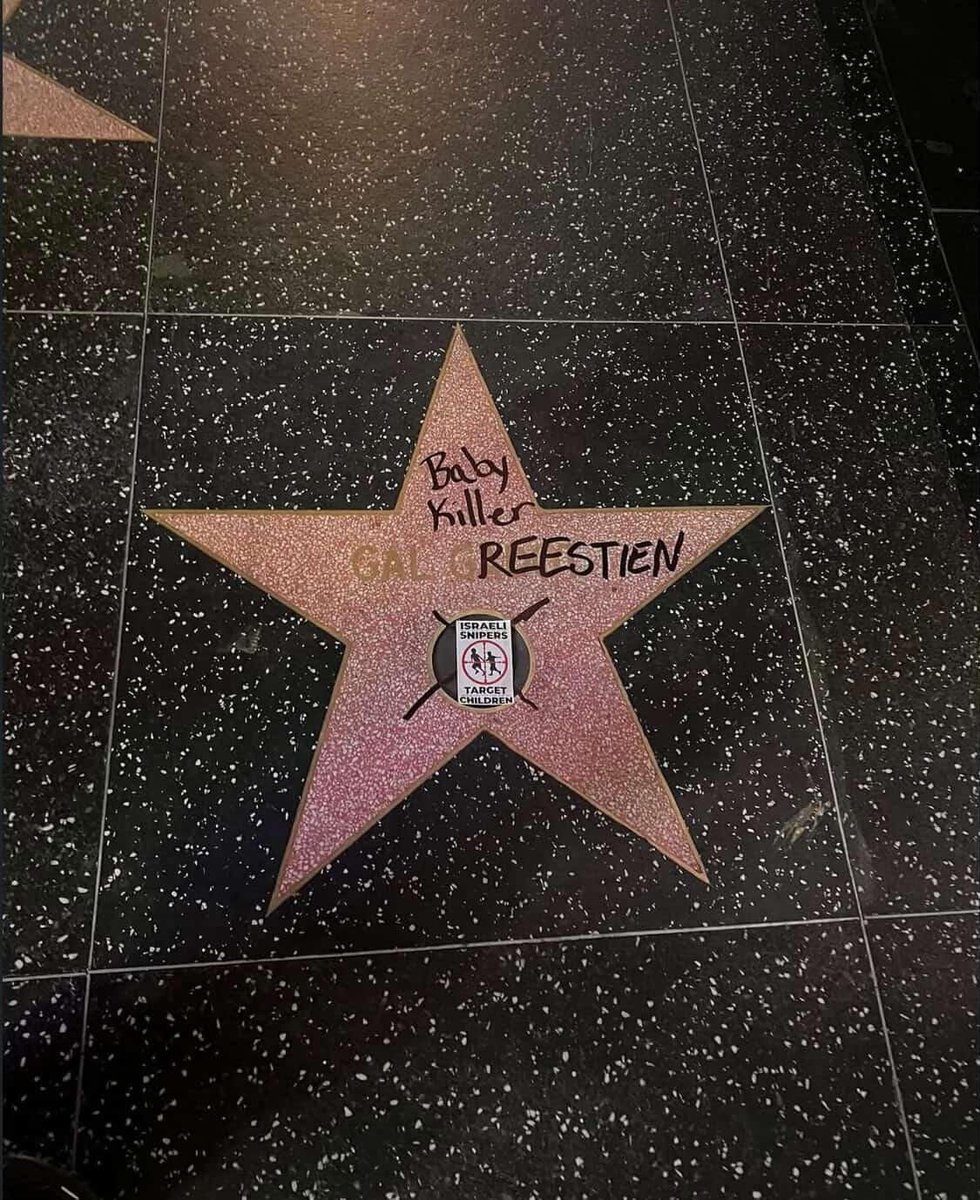
The Hollywood Walk of Fame star of Gal Gadot has reportedly been vandalized, just months after it was unveiled in March.
Images circulating online show the words “Baby killer” written across the star, along with a sticker reading, “Israeli snipers target children.” Gadot’s surname was also crossed out and replaced with the word “Greestien.”
American Jewish Committee Condemns Incident
The American Jewish Committee shared a photo of the vandalized star and condemned the act.
In a statement, the organization said that defacing a star dedicated to a Jewish-Israeli actress with such language contributes to a culture of antisemitism and dehumanization. It argued that this type of rhetoric should be condemned and warned of its potential to fuel violence.
Star Unveiled Ahead of ‘Snow White’ Premiere
Gadot received her Hollywood Walk of Fame star on March 18, shortly before the release of Snow White.
The ceremony was marked by demonstrations from both pro-Palestinian and pro-Israeli groups. Protesters gathered near the event carrying signs with messages supporting Palestine, while others expressed support for Israel. Chants from demonstrators continued throughout the ceremony. Police were also called to the scene after a pro-Palestinian protester took an Israeli flag, according to videos shared online. The demonstrations highlighted how the Israel-Gaza conflict has increasingly spilled into cultural and entertainment spaces, with celebrities, artists, and public figures often becoming focal points of political activism and public debate.
Gadot’s Public Position on Israel
Gadot has publicly voiced support for Israel on social media. Like many Israeli citizens, she completed mandatory military service and served for two years in the Israel Defense Forces after turning 18. Her statements have drawn support from pro-Israeli groups while also attracting criticism from pro-Palestinian activists.

Growing Polarization
The vandalism of Gadot’s Walk of Fame star underscores how cultural symbols and public figures are increasingly being drawn into geopolitical conflicts. While supporters of the act may view it as a form of political protest against Israel’s actions in Gaza, critics argue that targeting an individual artist because of her nationality, identity, or political views risks blurring the line between legitimate political expression and personal harassment. Nonetheless, the incident draws our attention towards the mass genocide committed by Israel and reminds us that political debates occupy central space in all aspects of life.
The incident also reflects a broader trend in which debates over the Israel-Gaza war have moved far beyond government institutions and diplomatic arenas, shaping discourse in universities, entertainment industries, social media platforms, and public spaces. As the conflict continues, symbolic acts such as protests, boycotts, and vandalism are likely to remain flashpoints in an increasingly polarized global conversation.
Related Stories:
Pentagon flags Israel as critical counterintelligence threat