
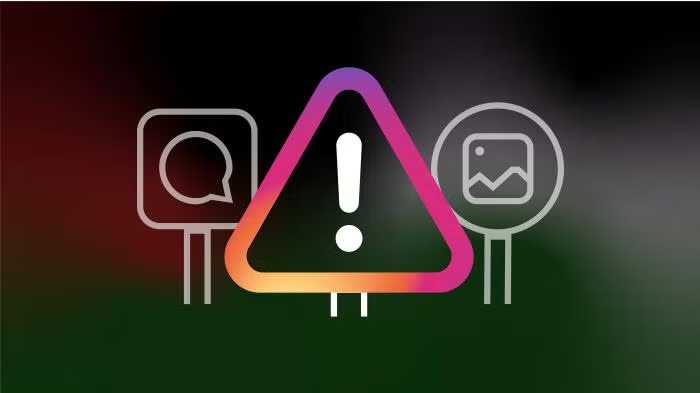
Instagram users report facing account bans, temporary blocks, or permanent suspension on Instagram for posting about. This has highlighted the strict, automated enforcement mechanisms governing modern social media platforms.
The Rise of Digital Protest and “Blockout” Campaigns
The issue often intersects with broader movements, such as global “#Blockout” campaigns, where social media users actively coordinate to unfollow, block, or purge specific accounts—often belonging to celebrities, influencers, or corporations—due to perceived political stances or silence regarding the humanitarian crisis in Gaza. When users attempt to manually remove dozens or hundreds of followers or rapidly unfollow accounts associated with Gaza content, Instagram’s security algorithms frequently flag this behavior as “coordinated inauthentic behavior,” bot-like activity, or a violation of platform guidelines.
Algorithmic Tripwires vs. Human Solidarity
Independent rights groups and digital advocacy organizations, such as Human Rights Watch and the digital rights group 7amleh, have heavily documented how Meta’s algorithmic moderation frequently misinterprets human solidarity or protest actions as automation. For years, Meta has maintained strict limits on the number of actions an account can take per hour—such as liking, commenting, following, or removing followers—to combat spam and automated bots. However, when users manually engage in mass purges as a form of political alignment or digital protest, they unwittingly trigger these automated tripwires. As a result, users find their accounts temporarily locked, flagged for spam, or entirely suspended under policies like spam restrictions or the “Dangerous Organizations and Individuals” guidelines.
The Ongoing Debate Over Free Expression
Conversely, high-profile Palestinian journalists, activists, and pages sharing primary documentation from Gaza have reported outright account deletions and shadow-banning. Meta has consistently maintained that its intention is never to suppress specific political speech or communities, often attributing sudden drops in visibility or sudden suspensions to technical glitches, higher volumes of user reports, or the strict enforcement of policies regarding dangerous organizations. Nonetheless, the automated banning of regular user accounts attempting to navigate, purge, or change their follower interactions around Gaza content continues to fuel a tense global debate regarding online free expression and algorithmic transparency during times of international crisis.
Curtailing digital protest
Ultimately, these suspensions underscore a growing friction between user-driven digital protest and corporate automation. Until platforms like Instagram can better distinguish between political solidarity and malicious bot activity, regular users will continue to find themselves caught in the crossfire of automated censorship.
Related Stories:
Facebook And Instagram Limit The Reach Of Palestinian News