
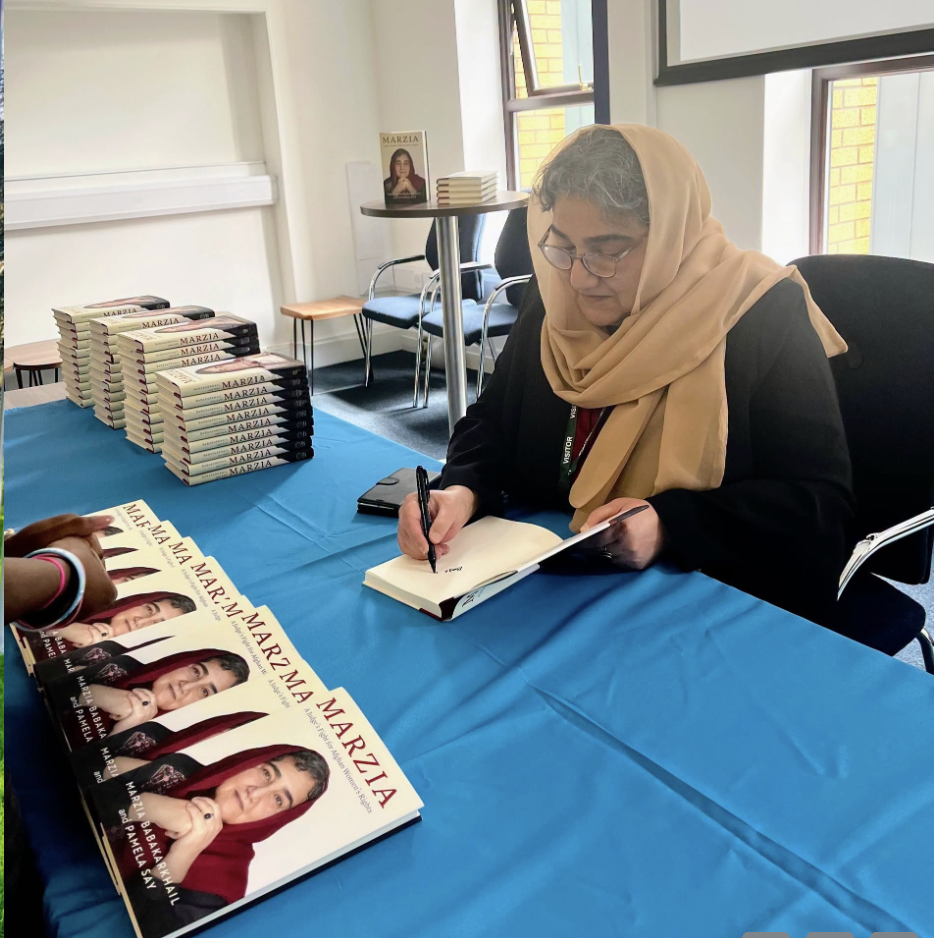
Former Afghan family court judge Marzia Babakarkhail recounts her journey from the courtroom to exile after the Taliban’s return to power, and explains why Afghanistan’s women judges — and the fight for women’s rights — remain a test of the international community’s commitment to justice.
Nearly five years after the Taliban’s return to power in August 2021, Afghanistan remains the only country that bars girls from secondary and higher education. Women have been systematically excluded from public life through restrictions on education, employment, political participation, movement, and access to public spaces. The United Nations has described these policies as amounting to “gender apartheid.”
In July 2025, the International Criminal Court (ICC) issued arrest warrants for Taliban Supreme Leader Haibatullah Akhundzada and Chief Justice Abdul Hakim Haqqani for the crime against humanity of gender persecution. The Taliban reject the ICC’s jurisdiction, and there is no broad international consensus on recognising its government.
This essay is written by an Afghan former family court judge whose life and career were shaped by decades of conflict, forced displacement, and her commitment to defending the rule of law and the rights of Afghan women.
— Observer Diplomat Editorial Team
Justice under threat
Justice has never been just a profession for me. It has been the purpose of my life. For many years, I served as a family court judge in Afghanistan, believing that the law could protect the vulnerable, defend human dignity, and offer hope to those who had nowhere else to turn. Every day, I listened to women who had suffered violence, forced marriage, and discrimination. I believed justice could change lives. That belief came at a great personal cost. Because I defended women’s rights and upheld the rule of law, I became a target of the Taliban. They attempted to assassinate me twice. The first attempt took place in Afghanistan in 1997.
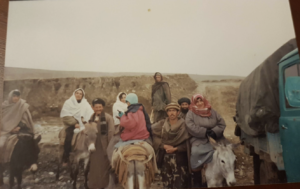
Taliban members came to my family home in Puli Khumri, Baghlan Province, intending to kill me because of my work as a judge and women’s rights activist. I escaped by hiding while they searched the house and fled to Pakistan later that day. Even there, I continued to face threats because I refused to remain silent. The second time was while visiting my sick mother in a hospital in Peshawar, Pakistan — a Taliban hit-and-run attack. Eventually, I sought asylum in the United Kingdom in 2008. My commitment to supporting Afghan women is unwavering, and as an Afghan citizen, I feel a strong responsibility to advocate for them.
From judge to refugee
While living as a refugee in Pakistan, I witnessed thousands of Afghan children deprived of one of the most basic human rights: the right to an education. I have always believed that education is the strongest foundation for peace, justice, and lasting change.
Knowing that the future of Afghanistan depends on its young generation, I established a school for Afghan refugee boys and girls in Peshawar, Pakistan, in 1997. It remained open until 2008, providing education to refugee children who had lost access to schooling and were unable to pay fees.
I trust that education can be a key factor for our young generation. My hope was to give them more than an education — to give them dignity, confidence, and the opportunity to dream again.
Afghanistan’s women after 2021
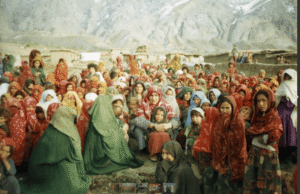
When the Taliban returned to power in August 2021, the justice system we had dedicated our lives to building — a system founded on justice, equality, and the rule of law — collapsed almost overnight. Women judges, prosecutors, lawyers, and other legal professionals were dismissed from their positions, with many forced into hiding. The Taliban’s actions to exclude women from public life, including banning them from working, accessing education, and entering many public spaces, appear to be aimed at erasing women from society altogether. Today, women in Afghanistan face an increasingly bleak future, with little hope of regaining the rights and freedoms they once held.
Behind every headline are real women. Today, Afghan women are systematically excluded from education, employment, public life, and freedom of movement. The exclusion of women and girls from education and professional life is not only a grave human rights violation but also a devastating blow to Afghanistan’s future prosperity, stability, and development. Since finding safety in the United Kingdom, I have dedicated my life to advocating for Afghan women. My memoir, “Marzia: A Judge’s Fight for Afghan Women’s Rights”, was published by Potomac Books on 1 May 2026.
The forgotten women judges
This is not only history. It is happening now, to people I know. One of the greatest burdens I carry is witnessing the suffering of my former colleagues. During these years, many have received promises of help from governments, international organisations, and some individuals’ evacuation and resettlement programmes that never materialised.
They submitted documents and proof from time to time, but at the end of the day, all were words and nothing more. Afghan women judges are not statistics or case numbers. They deserve honesty, dignity, and meaningful action, not false hope.
The world must do more
Why should women who sacrificed so much for justice be treated this way?
The international community must not allow Afghanistan’s women to disappear from the world’s attention. Meaningful action means expanding safe resettlement pathways for women judges and legal professionals, supporting Afghan girls’ education, and maintaining diplomatic and legal pressure to hold the Taliban accountable for gender persecution.
I still believe that one day Afghan girls will return to school without fear. Justice delayed should never become justice denied.
 |
Marzia: A Judge’s Fight for Afghan Women’s Rights
By Marzia Babakarkhail and Pamela Say
Potomac Books, an imprint of the University of Nebraska Press Published 1 May 2026 |
Related stories:
Batol Gholami Defies Afghanistan’s Gender Apartheid
We are completely trapped – the Taliban’s internet ban is a deliberate attempt to erase our future
4 Years of Darkness for Afghan Women Under the Taliban
How Afghan Girls in Exile Are Defying the Taliban’s War on Education