
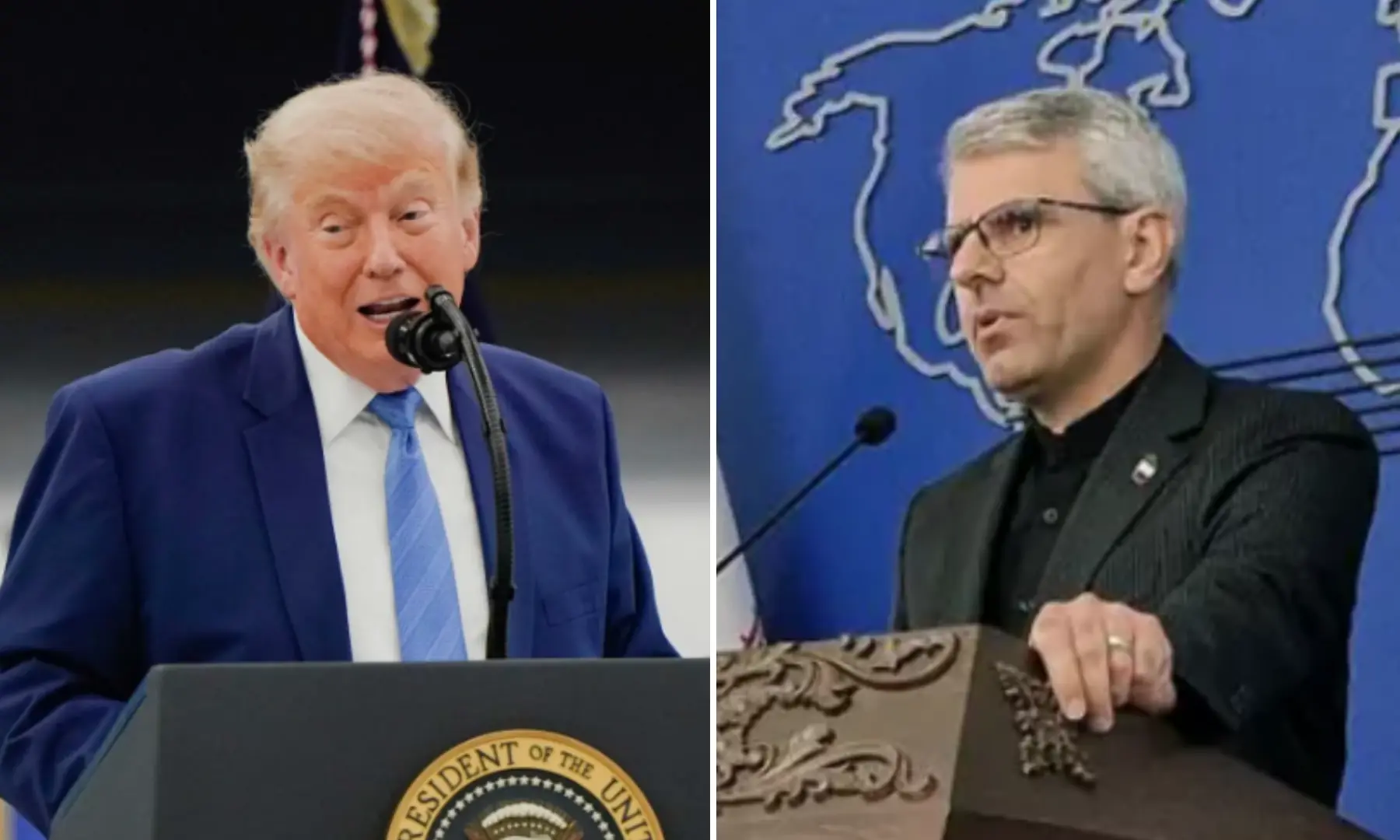
President Donald Trump’s announcement that discussions with Tehran would start on Monday has brought the prospect of renewed diplomacy between the United States and Iran back into the spotlight. Within hours, however, Iranian officials contested Washington’s account of the situation, claiming that talks are still centered on Oman-mediated agreements pertaining to the Strait of Hormuz and that there are no direct talks between the two nations.
The contradictory remarks have raised questions about whether the two nations are pursuing a more comprehensive diplomatic process or are only trying to handle an urgent security and economic problem involving one of the most significant maritime routes in the world.
The question is no longer only whether or whether discussions are taking place. Whether Washington and Tehran are negotiating the same subject is the question.
Washington’s Message
Trump has described the current negotiations as a critical moment for Tehran, warning that Iran faces severe consequences if it does not reach an agreement.
“This is the last chance for them to sign a good document,” Trump told reporters, while saying that negotiations were ongoing despite Iran’s previous denials.
Trump also warned that Iran could face what he described as “decapitation” if it fails to reach a deal, reinforcing his administration’s message that diplomacy is being pursued alongside military pressure.
The U.S. president has presented the talks as part of a broader strategy aimed at securing Iranian concessions, particularly over Tehran’s nuclear capabilities.
According to Trump, the reopening of the Strait of Hormuz would represent the first phase of an agreement, followed by discussions on Iran’s nuclear programme.
“The first phase” would involve restoring full access through the strategic waterway, while a second phase would focus on what Trump described as the “denuclearisation” of Iran.
The Strait of Hormuz Becomes the Immediate Priority
The Strait of Hormuz has become the immediate focus of the diplomatic efforts.
Trump said he expects the waterway to reopen quickly, describing the issue as relatively straightforward compared with the longer negotiations expected over Iran’s nuclear programme.
“We’re talking about the opening of the Strait and having it open, literally, by tomorrow,” Trump said, describing this as the first step before broader discussions.
The strategic waterway connects the Persian Gulf with global shipping routes and carries a significant portion of the world’s oil exports. Any disruption creates immediate concerns for energy markets, shipping companies, and governments dependent on Gulf energy supplies.
For international markets, the reopening of Hormuz is likely to matter more immediately than the outcome of longer-term diplomatic negotiations.
Oil Markets Become Part of the Political Equation
The economic consequences of the Iran conflict have also become part of Washington’s messaging.
Trump criticised major oil companies, arguing that energy firms were benefiting from higher prices caused by supply concerns linked to the conflict.
“I don’t like it. They’re making too much money,” Trump told reporters, arguing that companies were profiting from shortages created by the crisis.
The comments highlight how the geopolitical confrontation with Iran has become tied to domestic economic concerns in the United States.
Rising oil prices can increase pressure on governments, particularly ahead of political decisions where energy costs remain a major concern for consumers.
Tehran Rejects the Idea of Direct Negotiations
Despite Trump’s claims that talks are underway, Iran has continued to dispute Washington’s interpretation.
Iranian officials have denied that direct negotiations with the United States have resumed, maintaining that current discussions are focused on Oman-mediated arrangements.
The distinction is politically significant.
A direct negotiation process with Washington would represent a major shift after years of confrontation, sanctions, and mutual distrust.
By emphasizing Oman’s role, Tehran avoids presenting the talks as a concession to U.S. pressure while maintaining a channel to address immediate concerns surrounding the Strait of Hormuz.
Oman Has Become the Diplomatic Channel
Oman’s role in the latest US-Iran tensions reflects a decades-long strategy of maintaining dialogue with competing powers while avoiding direct alignment in regional rivalries.
Unlike some Gulf states that have taken more confrontational positions toward Tehran, Muscat has preserved diplomatic and economic ties with Iran while also maintaining close security relations with the United States and Western partners.
This position has allowed Oman to serve as a discreet channel during moments when direct communication between Washington and Tehran becomes politically difficult. The country previously facilitated secret US-Iran discussions that helped create the conditions for the 2015 nuclear agreement.
In the current crisis, Oman’s role is particularly significant because both sides have incentives to avoid direct confrontation. Tehran can engage without appearing to negotiate under US pressure, while Washington can pursue communication without publicly shifting its broader position toward Iran.
Oman’s involvement does not guarantee a wider diplomatic breakthrough, but it provides the mechanism through which limited agreements, particularly around maritime security and the Strait of Hormuz, can be explored.
A Narrow Opening in a Wider Conflict
The latest developments may represent a moment of de-escalation, but they do not necessarily signal a resolution of the broader US-Iran confrontation.
A deal focused on reopening the Strait of Hormuz would address an immediate security and economic concern. It would not automatically resolve the deeper disputes that have shaped relations between Washington and Tehran for decades.
Those disputes include Iran’s nuclear programme, sanctions, regional influence, and competing security interests across the Middle East.
A limited arrangement could reduce tensions without producing a comprehensive political settlement.
Related stories:
Iran Reportedly Set to Receive 400 Chinese Air Defense Missile Launchers