
The United Nations Security Council on Thursday voted overwhelmingly to lift a series of sanctions on Syrian President Ahmad al-Sharaa and senior members of his government, just days before his scheduled visit to Washington.
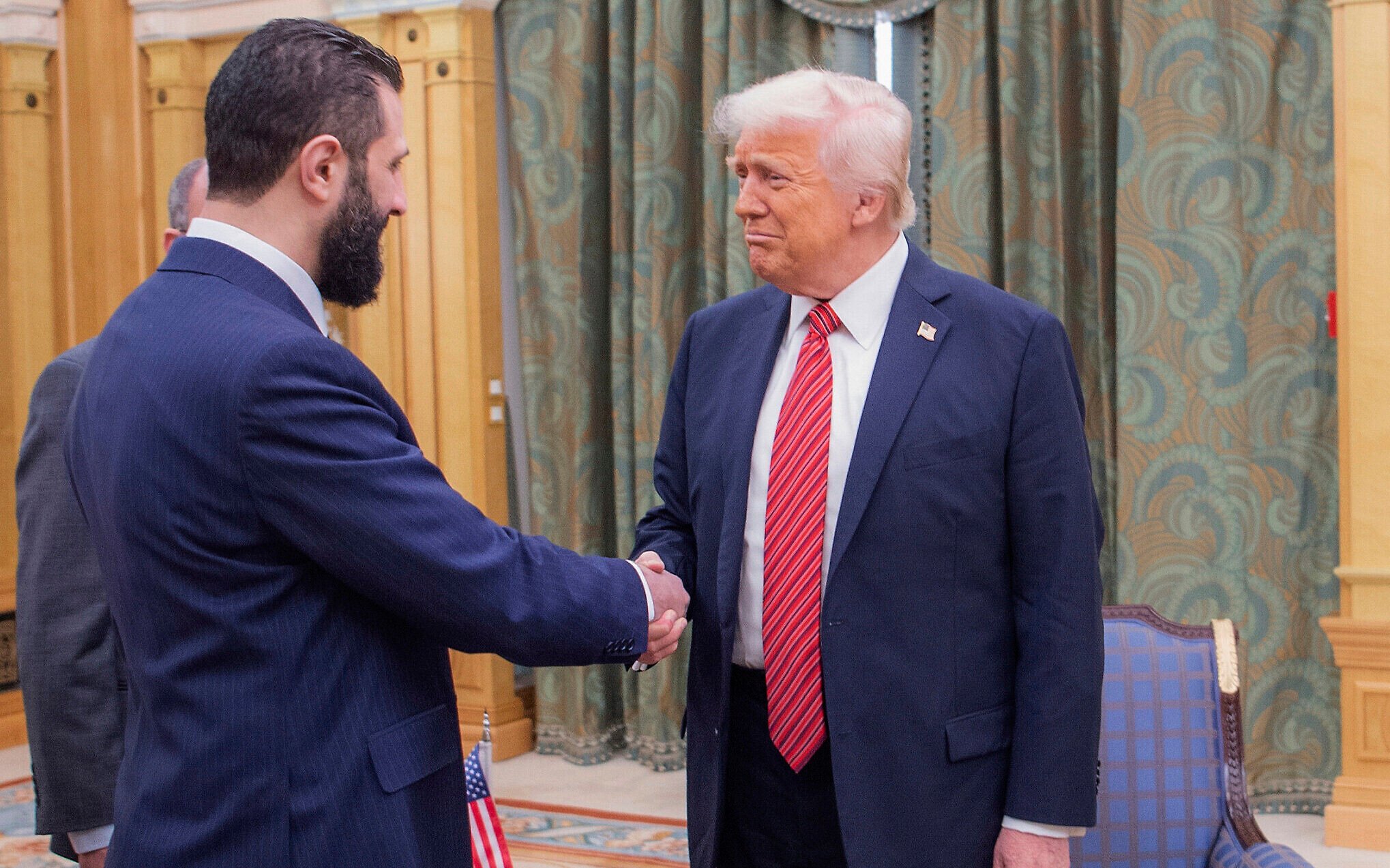
The U.S.-backed resolution, adopted with 14 votes in favor and China abstaining, effectively clears the way for al-Sharaa’s arrival at the White House on Monday, where he will be hosted by President Donald Trump in what will be the first visit by a Syrian head of state to the United States since 1946.
“With the adoption of this text, the council is sending a strong political signal that recognizes Syria is in a new era since Assad and his associates were toppled in December 2024,” said U.S. Ambassador to the U.N. Mike Waltz, referring to the fall of former President Bashar al-Assad after more than five decades of family rule.
From Isolation to Legitimacy
The vote represents a milestone in Syria’s political rehabilitation following the collapse of the Assad regime and the subsequent rise of Ahmad al-Sharaa, a former opposition commander who led the lightning offensive that ended the civil war late last year.
Syria’s foreign ministry welcomed the decision, calling it a “victory for Syrian diplomacy” and evidence of the “growing confidence in President al-Sharaa’s leadership.” The statement emphasized that the resolution restores “international recognition of Syria’s status and its pivotal role in the region.”
For Washington, the measure is part of a broader diplomatic gambit: an attempt to rebuild ties with Damascus and reshape the regional order after years of conflict, isolation, and shifting alliances.
According to senior U.S. officials, the decision to push the resolution ahead of al-Sharaa’s visit was “strategic timing”, signaling to both regional partners and adversaries that Syria’s reintegration into international frameworks has bipartisan support in Washington.
The China Factor and Geopolitical Calculus
Despite near-unanimous backing, Beijing’s abstention revealed lingering skepticism within the Security Council.
China’s ambassador, Fu Cong, criticized the U.S. for pushing the vote “to serve its own political agenda” and for not fully addressing “legitimate security concerns” related to counterterrorism in Syria.
“The sponsor did not fully heed the views of all members and forced the council to take action even when there were huge differences among council members,” Fu said in his statement following the vote.
Beijing’s caution reflects a wider anxiety about U.S. re-engagement in the Middle East, a region where China has sought to expand influence through economic and energy diplomacy. The abstention signals that while China does not oppose Syria’s return to the global stage, it remains wary of American-led frameworks of normalization.
From Rebel Commander to Partner
President al-Sharaa’s trajectory remains one of the most extraordinary transformations in recent Middle Eastern history. Once the head of Hayat Tahrir al-Sham, a group designated as terrorist by the United States and the United Nations, al-Sharaa recast himself as a pragmatic nationalist who helped broker local ceasefires and restore order in post-Assad Syria.
His rise coincided with the collapse of ISIS remnants and the exhaustion of a war that claimed nearly half a million lives and displaced millions. By early 2025, al-Sharaa’s transitional government had consolidated control and initiated a process of reconciliation with Arab states — a turnaround that culminated in his meeting with President Trump in Riyadh in May.
That meeting laid the groundwork for today’s diplomatic breakthrough. Trump promised to “end Syria’s isolation” and lift or suspend punitive measures that have crippled the Syrian economy for more than a decade.
A Calculated Bet from Washington
The lifting of sanctions is not without controversy. While the U.N. resolution targets measures related to terrorism designations, U.S. domestic sanctions, particularly those under the Caesar Syria Civilian Protection Act of 2019, remain in force. These can only be repealed through congressional action.
In a rare bipartisan statement, Senators Jim Risch (R-Idaho) and Jeanne Shaheen (D-New Hampshire), the top members of the Senate Foreign Relations Committee, endorsed the U.N. move, urging Congress to follow suit:
“It’s time to prioritize reconstruction, stability, and a path forward rather than isolation that only deepens hardship for Syrians,” the senators said. “We are working actively with the administration to repeal Caesar sanctions and bring the Syrian economy into the 21st century.”
Trump’s broader strategy appears aimed at drawing Syria back into the Western orbit, reducing Iranian influence, and integrating Damascus into a U.S.-led coalition against ISIS that already includes more than 80 nations. Al-Sharaa is expected to formalize Syria’s participation in that coalition during his White House visit next week.
The Long Road to Reconstruction
Beyond symbolism, the real challenge lies in Syria’s reconstruction. Fourteen years of civil war left entire cities, from Aleppo to Homs, in ruins, devastated infrastructure, and an economy shattered by sanctions and corruption. The United Nations estimates that tens of billions of dollars will be needed to rebuild.
Whether the international community, led by the United States and Europe, can deliver meaningful aid while maintaining accountability and transparency remains uncertain. Critics caution that lifting sanctions prematurely could entrench new networks of patronage and leave war crimes unaddressed.
Still, for a nation long viewed as a pariah, the image of a Syrian president stepping once more onto the White House lawn is nothing short of historic.
The Security Council’s decision marks more than the end of an era of isolation; it represents the redefinition of legitimacy in the post-Assad Middle East.
By embracing al-Sharaa, Washington is betting that Syria’s new leadership, once shunned, now courted, can serve as a stabilizing force rather than a spoiler. The risks are high, but so too are the potential rewards: a Syria re-anchored in diplomacy, aligned with a Western-backed coalition, and open to rebuilding from within rather than resisting from the margins.
For the first time in nearly eight decades, Damascus and Washington may once again speak not across the battlefield, but across the table.
Related stories:
EU lifts economic sanctions on Syria
Syria is interested in Joining the Abraham Accords
EU Invites Syrian Leader to Conference Amid Targeting of Religious Minorities