
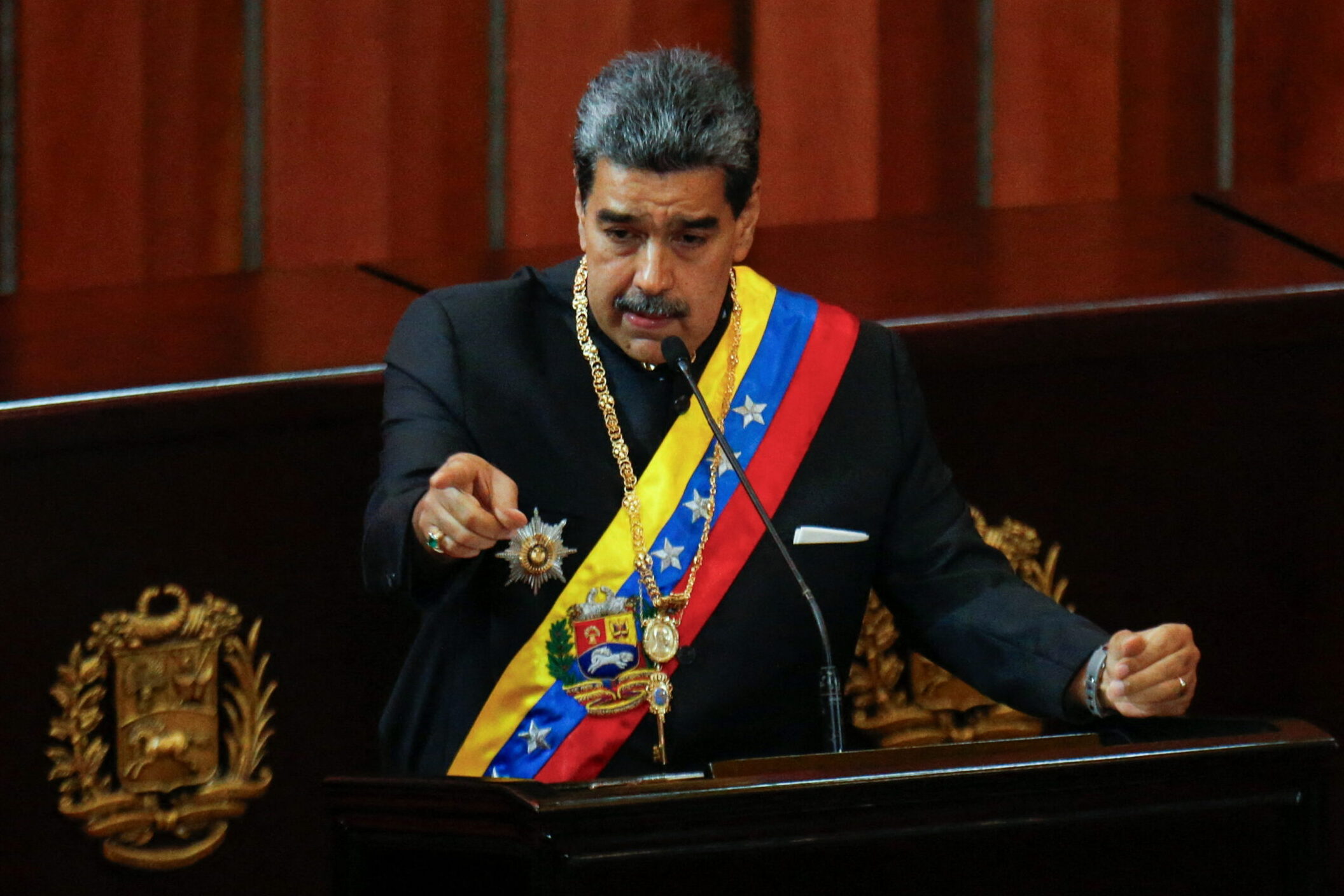
Venezuelan President Nicolás Maduro has accused the United States of plotting an attack on Venezuela to seize its vast reserves of oil, gas, gold, and fertile land.
In a fiery statement broadcast on national television, Maduro declared:
“If we didn’t have oil, gas, gold, and fertile land, the United States wouldn’t even know Venezuela’s name.”
The comment underscores Venezuela’s defiance amid ongoing U.S. sanctions, geopolitical tension, and fears of foreign intervention. Maduro’s accusation adds a new layer of confrontation to the already strained relations between Caracas and Washington.
Venezuela’s Resource Wealth
Venezuela is home to the world’s largest proven oil reserves, surpassing even Saudi Arabia, and holds massive deposits of natural gas and gold. The Orinoco Mining Arc, a 111,000 km² mineral-rich zone, contains some of the world’s most lucrative untapped deposits of gold, coltan, bauxite, and diamonds.
Analysts note that this abundance has long been both an asset and a liability.
According to a report by Argus Media, U.S. military movements in the Caribbean Sea have recently increased, prompting concern in Caracas about a possible escalation under the guise of anti-narcotics operations.
While Washington has repeatedly denied any plans for intervention, Venezuela views these actions as attempts to exert pressure on the Maduro government and gain leverage over its vast natural resources.
Maduro’s Warning Amid Rising Regional Tensions
Maduro’s statement follows a period of growing tension between Venezuela and the United States.
In recent months, the U.S. has strengthened its military presence near Venezuelan waters, while maintaining sanctions targeting Venezuela’s oil sector, state companies, and senior officials.
The Venezuelan leader responded by ordering the Bolivarian Armed Forces to remain on high alert, declaring that Venezuela will defend its sovereignty “at all costs.”
“We will never allow our land to be taken, our oil to be stolen, or our people to be enslaved again,” Maduro said during his televised address.
According to The Guardian, Venezuelan officials have even hinted at invoking a state of emergency if the situation worsens, citing possible “imperialist aggression.”
Domestic Rallying and International Messaging
Maduro’s rhetoric serves two key purposes, domestic unity and international positioning.
By framing the United States as an aggressor, the government seeks to rally Venezuelans around a shared narrative of resistance and sovereignty.
Domestically, this narrative helps reinforce the image of a besieged nation under constant threat, diverting attention from economic instability, hyperinflation, and political opposition.
Internationally, Maduro’s message resonates among Global South nations that share a history of colonial exploitation and economic sanctions. By portraying Venezuela as a victim of imperial ambition, Caracas strengthens its diplomatic ties with Russia, China, Iran, and other non-aligned states.
A Broader Geopolitical Equation
The accusation also reflects the reshaping of global energy politics.
As major powers diversify energy sources and secure mineral supply chains, Venezuela’s vast reserves regain strategic importance. The U.S. has a long history of energy interests in Latin America, while Venezuela continues to align with Russia and China in defiance of Western sanctions.
A Financial Times report revealed that Venezuela recently suspended gas projects with Trinidad and Tobago, citing increased U.S. naval activity in the region, a move that Maduro interpreted as an act of intimidation.
Critics and Counterarguments
Despite the strong rhetoric, critics argue that Maduro’s accusations are primarily political theatre aimed at consolidating power.
Western analysts note that there is no official evidence of a U.S. invasion plan, and Washington’s current focus is more on diplomatic isolation and economic sanctions rather than military confrontation.
However, the history of U.S. involvement in Latin America, from coups to covert operations, makes Maduro’s warning resonate with parts of the population and neighboring governments wary of foreign interference.
Environmental groups, meanwhile, have raised concerns over the Orinoco Mining Arc, warning that the rapid exploitation of gold and minerals under the pretext of “economic independence” has led to deforestation, pollution, and displacement of Indigenous communities.
The Path Forward: Resistance or Realignment?
Whether Maduro’s accusation reflects genuine security concerns or political posturing, it highlights the fragile balance between sovereignty and survival.
Venezuela’s government faces increasing isolation, economic crisis, and pressure from within, yet continues to leverage its natural wealth as both a shield and a weapon in global diplomacy.
The coming months will reveal whether this rhetoric escalates into confrontation or results in renewed energy diplomacy with U.S. allies in the region.
President Nicolás Maduro’s declaration, that the United States seeks to seize Venezuela’s oil, gas, and gold, is more than a political statement; it is a symbol of defiance rooted in decades of regional mistrust and resource geopolitics.
In a world still driven by energy, minerals, and influence, Venezuela’s story underscores a timeless lesson: nations rich in natural resources often become battlegrounds for power, not prosperity.
Related stories:
Venezuela Faces Protests Amid Election Uncertainty
Venezuela’s President Faces International Criticism Over Controversial Re-Election