
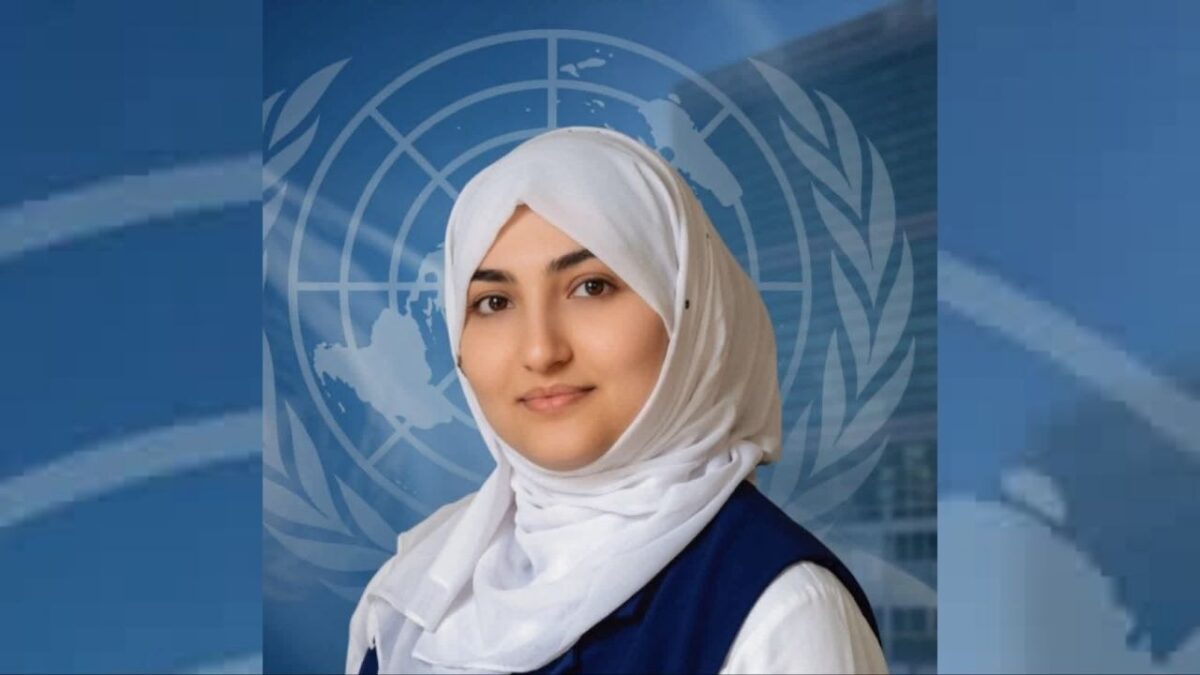
The death of Freshta Emady, a worker with the United Nations Population Fund (UNFPA) in Kabul, was confirmed by the UN office in Afghanistan on Friday, June 5.
UNAMA’s Response
Afghanistan International expressed its sadness in response to a question, but declined to share more information regarding her death’s circumstances. In recent days, reports on social media claimed that the UN employee had been killed.
“UN in Afghanistan mourns the passing of Ms. Freshta Emady, a valued member of the UNFPA family,” the UN said in a statement released in Kabul. We will miss her terribly.
Taliban’s response
Khalid Zadran, the spokesperson for the Kabul Police Command, stated that preliminary investigations indicate Emady died by suicide. Forensic examinations were initiated to conclude the investigation. Independent sources and initial reports emerging from Kabul suggested her death may have occurred amid a domestic violence dispute, with authorities pursuing her husband for questioning.
Gendered Apartheid unraveling in Afghanistan?
Her killing comes in the aftermath of repeated threats by the Taliban for her work at the UN. Threats against Ahmadi echo the ongoing harassment from Taliban-affiliated officials that female UN staff have reported since the Taliban seized control of Afghanistan in 2021. Women employees of the state have reported incidents of death threats, intimidation of family members and being followed back home. Taliban issued an order in 2023, banning female nationals from working at the UN. While the order was not formally implemented it did raise serious concerns about the fundamental rights of woman. It violated the rights of woman who were completely dependent on other womanand or did not have male counterparts.
Taliban extends restrictions
UNAMA said in a post on X that the Taliban’s detention of women in Herat creates grave human rights issues. UNAMA underlined that everyone has the right to travel freely and that men and women should have equal legal rights. The group urged the Taliban to uphold citizens’ fundamental rights and to abstain from acts that limit personal liberties.
Human rights organisations and civil society groups have reacted strongly to the recent detentions of women in Herat due to dress code infractions. This occurs at a time when the Taliban in Herat have stepped up their restrictions on women, claiming that no woman is allowed to travel about the city without donning the required type of clothing.
Freddom and safety in Afghanistan
Her death has added to already deep concerns over the safety and rights of women working in Afghanistan, especially those linked with international organisations. With conflicting accounts and an ongoing investigation, the case has become another reminder of the uncertain conditions faced by female professionals under the current political climate.
Related Stories:
Afghanistan and Russia: A Military Deal
Saudi Arabia holds women rights conference without women
51 countries sponsoring Israel’s genocide