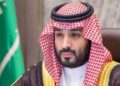


Newly reported documents allege that Saudi Crown Prince Mohammed bin Salman (MBS) sent luxurious gifts, including a tent, carpets, and other items, to Jeffrey Epstein, the disgraced financier whose global network of influence spanned politics, finance, and elite society. While Epstein’s credibility is deeply compromised due to his criminal history, these disclosures offer insight into how some of the world’s most powerful figures operate within private, often opaque networks that intersect with wealth, influence, and international diplomacy.
The reported exchange, including a December 2016 email Epstein allegedly sent to billionaire Tom Pritzker, has reignited interest in Epstein’s network and its links to high-profile elites. Beyond mere social interaction, these relationships reveal the complex interplay between personal loyalty, elite power, and strategic influence on a global scale.
Context: What the Alleged Documents Show

The documents, reported by investigative outlets, contain excerpts suggesting that Epstein had ongoing contact with MBS. Key points include:
-
A December 2016 email from Epstein to Tom Pritzker stating that “MBS sent me a TENT, carpets and all.” The tone implies a personal relationship rather than a transactional interaction.
-
Epstein reportedly displayed a framed photo of MBS in his New York residence, signaling the significance of the relationship in his social and professional life.
-
The symbolism of the gifts, particularly the tent, is noteworthy in Gulf culture. Tents are historically associated with leadership, mobility, and authority, while carpets convey wealth, sophistication, and cultural sophistication.
-
Some reports suggest Epstein claimed multiple meetings or communications with MBS, reinforcing the notion of an ongoing, potentially influential relationship.
This context is crucial because it highlights how elite figures may maintain private channels of influence that exist beyond formal state-to-state diplomacy. Such networks are often invisible to the public eye yet wield disproportionate power.
Why This Matters: Power, Influence & Elite Networks

1. Elite Access and Global Leverage
Epstein’s connection to MBS illustrates how private relationships can serve as instruments of influence. Elite figures often rely on personal networks to:
-
Access exclusive information or intelligence.
-
Shape perceptions within social or political circles.
-
Gain prestige by associating with high-profile personalities.
In this context, MBS’s engagement with Epstein could be interpreted as a strategic alignment, enabling both parties to navigate global elites more effectively.
2. Symbolism and Strategic Signaling
In Gulf tradition, the exchange of gifts carries deep cultural significance. A tent, beyond its material value, evokes leadership, mobility, and hospitality, signaling respect and recognition. By sending such gifts, MBS may have been embedding himself into Epstein’s network, consolidating personal influence while maintaining plausible deniability in public arenas.
3. Reputation, Risk, and Perception
For Epstein, access to high-profile individuals like MBS was a form of social and reputational capital, lending legitimacy to his otherwise controversial position. For MBS, the relationship entails risks:
-
Public exposure could raise questions about judgment and ethical considerations.
-
Critics may interpret the engagement as indicative of broader patterns of elite impunity.
-
The association may amplify reputational vulnerabilities amid scrutiny of Saudi Arabia’s human rights record and domestic governance style.
4. Geopolitical Implications
MBS wields enormous regional and global influence as the de facto ruler of Saudi Arabia. His alleged engagement with Epstein suggests:
-
The use of informal, private networks to complement official diplomacy.
-
A recognition of Epstein’s global reach, including his access to financial, political, and cultural elites.
-
The potential for strategic leverage, as relationships with globally connected figures can influence perception, access, and policy discussions in subtle ways.
Historical & Structural Perspective
Mohammed bin Salman’s rise to power has been marked by bold domestic reforms, aggressive consolidation of authority, and assertive foreign policy maneuvers. At the same time, Epstein constructed a global web of influence connecting royalty, political leaders, and billionaires.
Understanding the reported relationship between the two requires historical and structural context:
-
MBS’s Leadership Style: Since becoming crown prince in 2017, MBS has centralized power, sidelined rivals, and projected a modernizing vision for Saudi Arabia. His leadership combines control over state mechanisms with an emphasis on personal networks for influence abroad.
-
Epstein’s Role: Epstein leveraged wealth, secrecy, and social capital to maintain access to high-profile figures. He functioned as a node in global networks where personal loyalty and social signaling could wield more influence than official titles.
-
Intersection of Power and Social Capital: The alleged connection illustrates a structural reality: elite influence operates not solely through formal institutions but through personal relationships, gifts, and private channels. These mechanisms often remain invisible to public scrutiny but can shape decision-making at national and international levels.
Critical Assessment: What We Can & Cannot Conclude
What we can reasonably conclude:
-
Epstein claimed in emails that MBS sent gifts, suggesting a personal relationship.
-
The relationship appears to have involved repeated communications or visits, implying ongoing interaction.
-
Symbolic gifts and personal displays, such as photographs, indicate deliberate cultivation of influence.
What remains uncertain or unverified:
-
The exact motivations for MBS’s engagement — whether social, strategic, or otherwise — remain unclear.
-
There is no publicly verified evidence of direct financial or political quid-pro-quo.
-
Reporting relies on partial document excerpts, without access to full, authenticated primary sources.
Implications for Global Governance
-
Transparency and Accountability: Relationships like MBS–Epstein highlight challenges in holding elites accountable when power is exercised through private networks.
-
Strategic Risk: Private interactions with controversial figures can expose leaders to reputational and diplomatic risks.
-
Understanding Power Dynamics: Informal networks often shape global politics as much as formal diplomacy. Analyzing these connections is essential to understanding how influence, loyalty, and leverage operate in practice.
The reports suggesting that Saudi Crown Prince MBS sent gifts to Jeffrey Epstein reveal the intersection of wealth, influence, and elite networks on a global scale. While the relationship itself may appear symbolic, it reflects structural realities about power and personal influence among the world’s most powerful figures.
Elite networks operate in the shadows, often beyond the reach of public oversight, yet they significantly impact global governance and perception. The MBS–Epstein connection underscores the importance of transparency, scrutiny, and critical analysis in understanding how informal relationships shape political, social, and economic outcomes in the 21st century.