
As Indonesia expands ties with China, the United States, France, India and Russia, Jakarta is testing whether its long-standing tradition of “free and active” foreign policy can survive an increasingly fragmented world.
AN INDEPENDENCE DAY UNDER PRESSURE
Indonesia turns 81 on August 17, 2026, two days after a magnitude 7.7 earthquake struck Flores Island, killing dozens and cutting off communities across East Nusa Tenggara. The timing is a reminder, not the story itself: this is a country managing real vulnerability at home while running one of its most ambitious foreign policies in decades.
Since President Prabowo Subianto took office, Jakarta has built substantial relationships with China, the United States, France, India and Russia, sometimes within the same month. The question that raises is not whether Indonesia has options. It clearly does. The question is whether having this many options is still a strategy, or has become something closer to the absence of one.
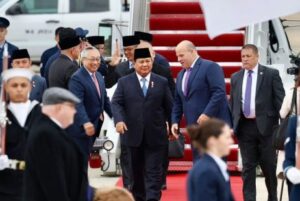
A COUNTRY THAT REFUSES TO CHOOSE
Indonesia’s foreign policy under Prabowo takes its shape from five relationships, each doing different work.
With France, it is about defense capability: a multibillion-dollar order for Rafale fighter jets, a submarine construction agreement, and summit-level meetings with President Emmanuel Macron that have made Paris Jakarta’s most significant European defense partner.
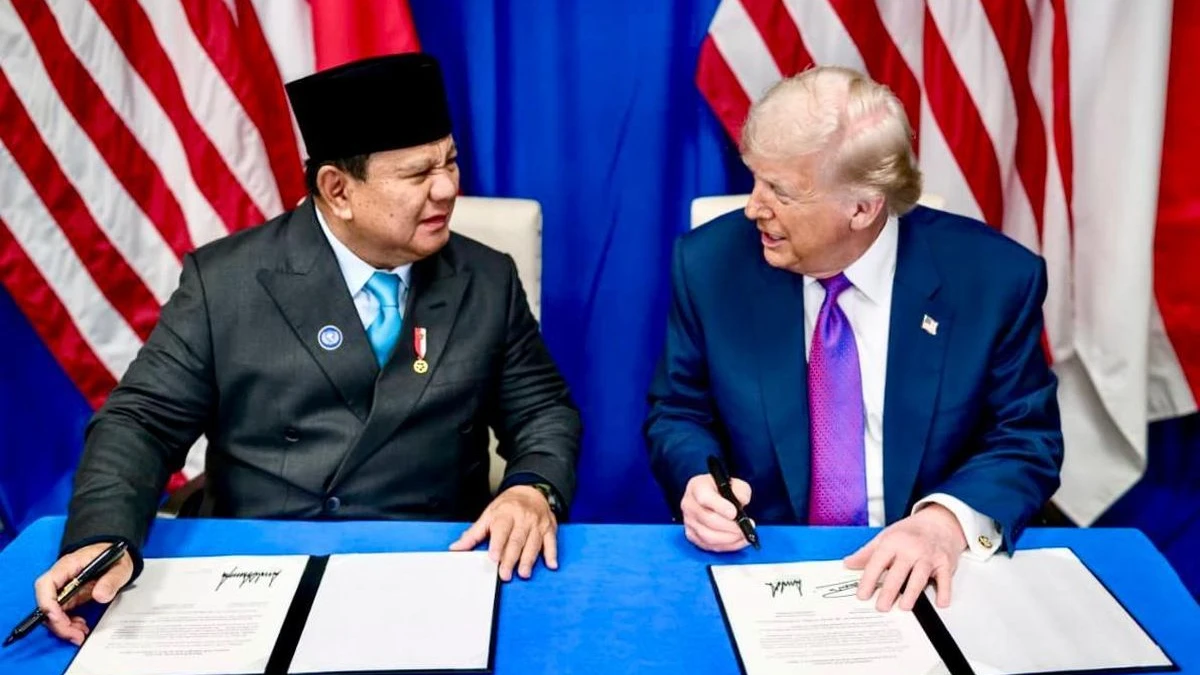
With the United States, it is a formal security architecture: a “Major Defence Cooperation Partnership” agreed in April 2026, alongside a reciprocal trade agreement backed by billions of dollars in committed investment.
With China, it is economic gravity Jakarta cannot walk away from: trade, investment and critical minerals ties that anchor much of the Indonesian economy, even as unresolved maritime tension around the Natuna Islands keeps the relationship from warming into anything closer.
With India, it is solidarity of identity rather than hard capability: sixteen cooperation agreements signed during Prime Minister Narendra Modi’s July 2026 visit to Jakarta, most of them framed explicitly around amplifying the voice of the Global South.
With Russia, it is the relationship drawing the most scrutiny: an energy and minerals agreement reached during Prabowo’s fifth meeting with President Vladimir Putin, a pace of engagement unmatched by any Indonesian leader in decades.
None of these relationships cancels out the others on paper. Taken together, they are exactly what Indonesia has said its foreign policy would look like since 1948: free from permanent alignment, active in nearly every direction at once.
BUT WHAT IS INDONESIA ACTUALLY TRYING TO ACHIEVE?
That doctrine, known as bebas aktif, or “free and active”, was set out by Indonesia’s first vice president, Mohammad Hatta, in a speech to the Working Committee of the Central Indonesian National Committee in Yogyakarta on September 2, 1948. Speaking as the young republic faced pressure to align with either Washington or Moscow, Hatta argued that Indonesia should refuse to be, in his words, an object of an international conflict, and should instead remain the subject that reserves the right to decide its own destiny. The principle was never really about neutrality for its own sake. It was about refusing to let anyone else define Indonesia’s choices.
In 2026, that doctrine faces a different kind of test than the one Hatta had in mind. The Cold War’s two poles have given way to a genuinely fragmented order, one with more potential partners, more competing invitations, and no obvious binary to reject. Indonesia now has to decide not just whether to avoid choosing a side, but how many relationships one country can actively manage before the doctrine starts working against itself.
THE PARADOX OF STRATEGIC AUTONOMY
This is the real tension running through Jakarta’s diplomacy, and it does not resolve cleanly in either direction.
Read as hedging, every one of Indonesia’s five relationships makes sense on its own terms. Defense ties with France and the United States reduce reliance on any single security guarantor. Economic engagement with China keeps trade and investment flowing. The Global South partnership with India and Indonesia’s BRICS membership give Jakarta standing among developing nations, while the relationship with Russia keeps energy and mineral options open. Each addition, in this reading, increases Indonesia’s freedom of maneuver rather than compromising it.
Read as ambiguity, the same relationships start to look like a coherence problem. Indonesia’s participation in the US-led Board of Peace initiative is the clearest example. The move drew criticism from religious organizations and political parties inside Indonesia, who argued that joining a Washington-organized framework pulled Jakarta toward one bloc in a way that sits uneasily with bebas aktif’s founding refusal to be claimed by either side. Prabowo’s own response, a public threat to suspend Indonesia’s participation if the underlying conflict continued, only underlined the difficulty: a government trying to prove its independence by threatening to walk away from the very framework it had just joined.
That is the pattern worth watching. The more relationships Indonesia adds, the harder it becomes to explain what any single one of them means, and the more each new commitment risks contradicting one made somewhere else.
THEN BRING FLORES BACK
None of this foreign policy exists apart from what happened in Flores. For a middle power, the ability to project influence abroad is also tied to its capacity to manage crises at home, and the earthquake is an early test of exactly that capacity in 2026.
Indonesia wants to be read internationally as a resilient, capable middle power, substantial enough to be worth France’s defense contracts, India’s Global South partnership, and Washington’s security architecture. But it remains one of the most disaster-prone countries on earth, spread across more than seventeen thousand islands, with infrastructure and emergency response capacity that vary enormously by region. How Jakarta manages the recovery in East Nusa Tenggara over the coming weeks will say as much about Indonesia’s strategic weight as any summit in Paris or Washington. Middle powers are judged, in part, on whether they can take care of their own people while asking the world to take them seriously.
SO, WHAT DOES INDONESIA LOOK LIKE TO THE WORLD?
Indonesia at 81 is neither the fragile state some outside observers still assume nor the emerging great power its diplomacy sometimes suggests. It is a middle power testing, in real time, how far a doctrine articulated 78 years ago for a very different international order can stretch across five or six simultaneous partnerships without losing its meaning.
The open question is not whether Jakarta can keep adding relationships. It clearly can. It is whether Indonesia can still call the result freedom of action once nearly every major power has a claim on part of it.
Related stories:
Indonesia defends joining BRICS, vows to be ‘bridge-builder’ amid shifting alliances
Indonesia’s Admission To BRICS Raises Concerns About Impact On Jakarta-West Relations
A name, a function and a philosophy’: The art of Indonesian batik