
In many parts of the world, China is seen more positively than the United States for the first time since the Pew Research Center started monitoring global sentiments about 20 years ago.
The results, which were released in the most recent Global Attitudes Survey by the Pew Research Center, represent a significant turning point in public opinion worldwide and show shifting opinions of the two biggest economies in the world. The study, which was conducted among 42,151 adults in 36 countries and territories, revealed that only six countries still favor the United States, while 25 countries now have more positive opinions of China.
According to the report, opinions throughout the world are changing as a result of China’s growing economic and diplomatic power and the waning trust in American leadership in many regions of the world.
Public opinion has grown in importance as a gauge of global impact as the rivalry between Washington and Beijing transcends economic and military might.
Key Findings from the Pew Research Survey
The latest survey presents one of the clearest indicators yet of shifting international attitudes.
| Survey Highlights | Findings |
|---|---|
| Countries surveyed | 36 |
| Total respondents | 42,151 |
| Countries favoring China over the U.S. | 25 |
| Countries favoring the U.S. over China | 6 |
| Countries where Xi Jinping received higher confidence than Donald Trump | 22 |
The countries that continue to hold more favorable views of the United States include:
- Israel
- Japan
- India
- South Korea
- The Philippines
- Poland
The magnitude of the change is demonstrated by the fact that a number of longstanding U.S. allies, such as Canada and Mexico, now have more positive views of China than the United States.
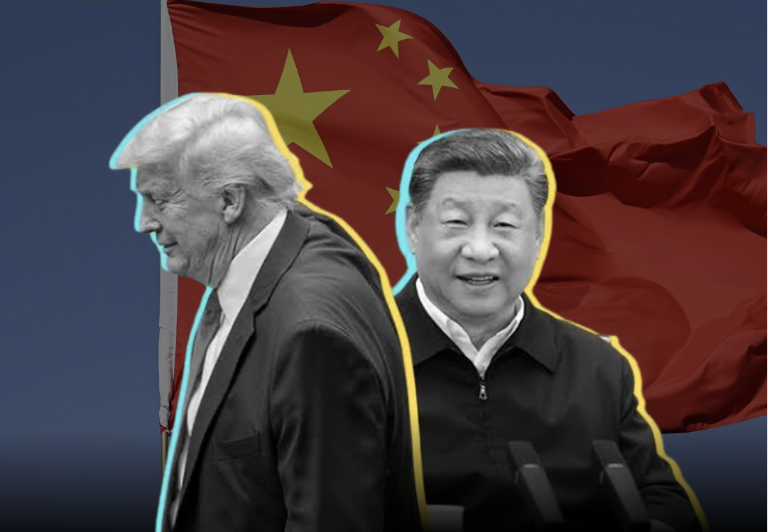
In 22 countries, Chinese President Xi Jinping was seen as more trustworthy than U.S. President Donald Trump, according to the survey, while total confidence in both leaders is still somewhat low.
Why Do People Around the World See China More Positively?
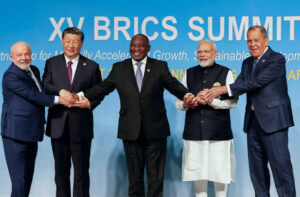
China’s increasing popularity is not the product of a single development, but rather of several political and economic reasons.
Growing Economic Power
China has grown to be more than 120 countries’ biggest trading partner during the last 20 years.
Beijing has funded and backed infrastructure projects throughout Asia, Africa, Latin America, and portions of Europe through the Belt and Road Initiative (BRI). China’s economic ties with numerous developing nations have been reinforced by investments in ports, railroads, energy projects, and digital infrastructure.
China has emerged as a significant investor and development partner for numerous governments.
Increased Engagement in Diplomacy
Additionally, China has increased its diplomatic reach through multilateral organizations, regional organizations, peace initiatives, and development financing.
Its reputation as a more significant global player has been strengthened by its expanding participation in forums like the Global South, the Shanghai Cooperation Organization (SCO), and BRICS.
Stable Communications on Foreign Policy
In contrast to the policy changes that frequently coincide with changes in U.S. administrations, many foreign observers consider Beijing’s foreign policy to be largely stable, despite China’s ongoing criticism about human rights, Taiwan, the South China Sea, and Hong Kong.
Why Has America’s Image Fallen?
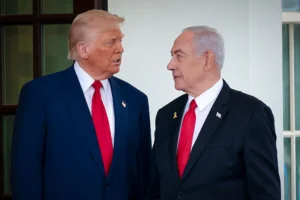
The survey does not necessarily show that China has gained widespread acceptance. Rather, it also represents waning trust in the US in many areas.
This pattern can be explained by a number of variables.
Polarization in politics
The United States’ internal political divisions continue to garner attention from around the world. Allies and partners are worried about the constancy of American leadership due to frequent shifts in foreign policy goals.
Tensions in Trade and the Economy
A number of trading partners’ opinions of the United States have been impacted by trade disputes, tariffs, and economic differences.
Instead of becoming overly dependent on one large power, nations are increasingly looking for diverse economic ties.
Views of Leadership
Broader perceptions of their nations are frequently influenced by public opinion toward national leaders.
Although neither leader has exceptionally high levels of confidence worldwide, the Pew survey revealed that Xi Jinping received greater confidence ratings than Donald Trump in 22 countries.
The results imply that opinions about leadership continue to play a significant role in global public opinion.
Global Competition Is Changing Due to Soft Power
The increasing significance of soft power in international affairs is highlighted by the Pew research.
The term “soft power,” which was first used by political scientist Joseph S. Nye Jr., describes a nation’s capacity to sway others by appeal rather than force.
These days, a favorable worldwide reputation can benefit nations:
- Boost diplomatic ties
- Draw in foreign capital
- Increase the impact of culture
- Boost travel
- Increase confidence in international organizations
China has made large investments in international media, public diplomacy, educational exchanges, development aid, and cultural engagement.
In the areas of higher education, technology innovation, scientific research, entertainment, and financial markets, the United States still has significant advantages. However, the survey indicates that positive impressions around the world are no longer a result of these abilities.
Regional Disparities Persist
Despite China’s overall successes, opinions throughout the world are still split.
Strong security alliances with Washington continue to benefit the United States, especially in the Indo-Pacific region.
China presents strategic concerns for Japan, South Korea, India, and the Philippines, which contributes to their greater support for the United States.
In contrast, a number of nations in Southeast Asia, Latin America, Africa, and portions of Europe have more favorable opinions of China, which is indicative of growing trade and development alliances.
These regional variations show that national agendas, economic interests, and security concerns all influence public opinion in addition to political beliefs.
The Significance of the Results for International Politics
Wider shifts in the global system are reflected in the Pew study.
The results indicate that the globe is becoming more multipolar, with nations pursuing closer ties with several big powers rather than solely aligning with one, rather than indicating the end of American influence.
While the United States continues to be a major military, technological, and financial power with strong global alliances, China’s growing influence is bolstered by increased commerce, infrastructure investment, and diplomatic engagement.
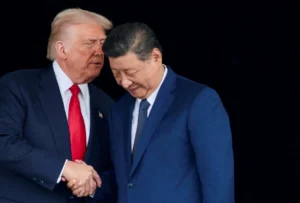
International public opinion has undergone a dramatic shift, according to the most recent Pew Research survey.
In many parts of the world, China is now seen more positively than the United States for the first time since the organization started tracking global sentiments. The results indicate that China’s worldwide image has significantly improved, reflecting broader changes in diplomacy, economics, and global governance, even though the United States still plays a major role in world affairs.
It’s unclear if this shift is a reaction to the present political climate or a long-term realignment. Nonetheless, the poll emphasizes that influence in the twenty-first century is increasingly determined not simply by military prowess or economic production but also by how states are viewed globally.
Frequently Asked Questions
Why is China now viewed more favorably than the US?
According to Pew Research, China’s expanding economic partnerships, infrastructure investments, and diplomatic engagement, alongside declining confidence in U.S. leadership in many countries, have contributed to the shift in global public opinion.
Which countries still view the US more favorably than China?
The survey found that Israel, Japan, India, South Korea, the Philippines, and Poland continue to hold more favorable views of the United States than China.
Does this mean China has replaced the US as the world’s leading power?
Not necessarily. The survey measures public opinion, not overall economic, military, or technological strength. While China has improved its global image, the United States remains a leading global power across many dimensions.
Read more:
Pew Research: People in Many Countries Now View China More Positively Than the U.S.
Pew Research: Views of China and Xi Are Improving Globally
Pew Research: China Global Image
Related articles:
26 leaders visit China in 2026
China Now Holds the Largest Foreign Exchange Reserves — What It Means for the Global Economy