
The UN Counter-Terrorism Week is currently underway at the UN Headquarters in New York, serving as the world’s premier platform to review global anti-terror strategies. Organized by the UN Office of Counter-Terrorism (UNOCT), this high-level forum unites member states, intelligence experts, and agency heads. This year, attendees are focused on confronting rapidly evolving transnational threats, including the weaponization of artificial intelligence, drones, and encrypted communications by extremist groups.
IMCTC Deploys High-Level Delegation to Global Summit
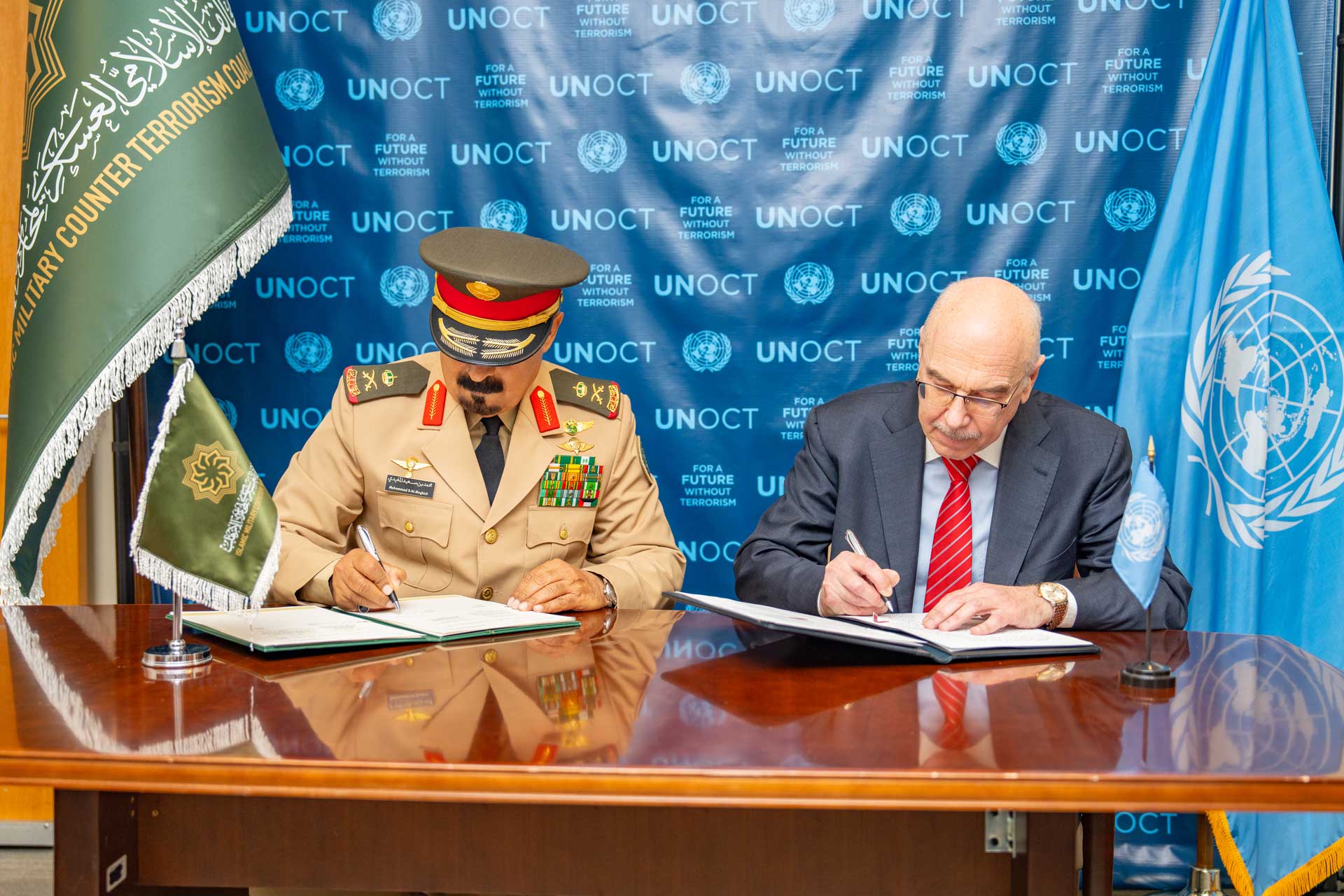
An elite delegation from the Islamic Military Counter Terrorism Coalition (IMCTC) is actively participating in the summit to align regional security frameworks with international standards. Saudi Minister of Defense and IMCTC Chairman, Prince Khalid bin Salman bin Abdulaziz, directed the high-level visit. Secretary-General Maj. Gen. Mohammed Al-Moghedi is currently leading the coalition team on the ground.
During the opening sessions, the IMCTC leveraged the forum to share its specialized expertise across four core strategic domains:
-
Ideological defense
-
Strategic communications
-
Counter-terrorist financing
-
Military coordination

Strategic Sideline Diplomatic Meetings
On the sidelines of the main assembly, Maj. Gen. Al-Moghedi held crucial bilateral meetings aimed at expanding institutional cooperation and intelligence-sharing networks. He held extensive talks with UNOCT Acting Under-Secretary-General Alexandre Zuev and UN Counter-Terrorism Centre Director Mauro Miedico. Additionally, the Secretary-General met with Saudi Arabia’s Permanent Representative to the UN, Dr. Abdulaziz Alwasil, to coordinate diplomatic strategies.
The Geopolitical Weight of Saudi Leadership
Saudi Arabia’s prominent presence at this conference underscores its position as a central pillar of global security. Riyadh serves as the founding donor and permanent chair of the advisory board for the UN Counter-Terrorism Centre (UNCCT), having contributed over 110 million dollars to its trust fund.
By funding the UN’s primary counter-terrorism arm while simultaneously chairing the IMCTC, Riyadh acts as the primary bridge between Western security agencies and the Islamic world. This dual leadership role allows Saudi Arabia to directly shape global defense policies, coordinate cross-border intelligence, and systematically choke off emerging terrorist financing networks at the source.
Related Stories:
UN’s employee killed in Afghanistan
Saudi Arabia holds women rights conference without women
AI Data Centers Consume More Power Than Most Nations: UN Report