Friday, September 4, 2026
Observer Diplomat
  • Home
  • Regions
    • US & Canada
    • China
    • Latin America & Caribbean
    • Middle East
    • Central Asia
    • South Asia
    • East Asia & The Pacific
    • Africa
    • Europe
  • Topics
    • Opinion
    • Society
    • Security
    • Economy
    • Diplomacy
    • Politics
    • Environment
  • More
    • National Days
    • Podcasts
    • Interviews
    • Books and Reviews
    • Heads of Mission In Pakistan
    • Events
  • Magazine
  • About
    • Subscription
    • Newsletter
    • About Us
    • Write For Us
    • Advertise
    • Privacy Policy
    • Contact Us
No Result
View All Result
  • Home
  • Regions
    • US & Canada
    • China
    • Latin America & Caribbean
    • Middle East
    • Central Asia
    • South Asia
    • East Asia & The Pacific
    • Africa
    • Europe
  • Topics
    • Opinion
    • Society
    • Security
    • Economy
    • Diplomacy
    • Politics
    • Environment
  • More
    • National Days
    • Podcasts
    • Interviews
    • Books and Reviews
    • Heads of Mission In Pakistan
    • Events
  • Magazine
  • About
    • Subscription
    • Newsletter
    • About Us
    • Write For Us
    • Advertise
    • Privacy Policy
    • Contact Us
No Result
View All Result
Observer Diplomat
No Result
View All Result
Home Middle East

Assad Has Been Sentenced to Death. Can Syria Actually Bring Him Back?

Bashar al-Assad has been convicted in absentia for crimes committed during Syria’s civil war. But with the former president living in Russia, Damascus faces a far harder question than securing a verdict: how to enforce it.

News Desk by News Desk
August 12, 2026
in Middle East, Politics
0
Assad Has Been Sentenced to Death. Can Syria Actually Bring Him Back?
Share on FacebookShare on Twitter

The Verdict

On Tuesday, Syria’s Fourth Criminal Court in Damascus sentenced former President Bashar al-Assad to death in absentia, finding him guilty of crimes against humanity and war crimes committed during the country’s nearly 14-year civil war. The conflict killed roughly half a million people and displaced millions more. His younger brother, Maher al-Assad, who commanded the notorious 4th Armored Division, also received a death sentence in absentia. Former security official Atef Najib, who was tried in person, was sentenced to death as well.

The ruling is the first conviction against Bashar al-Assad by Syria’s post-Assad authorities since his government collapsed in December 2024. For victims and their families, it represents a formal judicial acknowledgment of crimes committed under the former government.

But the verdict comes with an immediate complication.
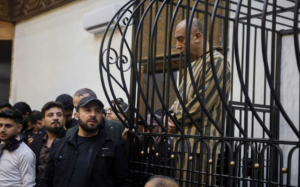
Bashar Assad’s cousin Atef Najib was on trial for leading a crackdown that led to Syria’s uprising. (AP PHOTO)

In Absentia

Assad was not in the courtroom. Neither was Maher. Both were tried and sentenced in absentia, a legal mechanism that allows a court to proceed without the defendant being present.

Trials in absentia are not unusual in cases involving fugitives, but they do change what a verdict can actually accomplish. A conviction establishes that a court has found the defendant guilty and places that finding on the legal record. What it cannot do on its own is put a fugitive in a prison cell.

For Syria, that distinction is critical.

Why Assad Is in Russia

When Assad’s government fell in December 2024 following a rapid rebel offensive, the former president and his family fled Syria and were granted asylum in Russia. Assad has remained in Moscow since then, outside the reach of the Syrian authorities now seeking to hold him accountable.

Russia intervened militarily in Syria in 2015, providing crucial support to Assad’s government and helping it regain territory from opposition forces.

That history matters now because Syria is seeking the return of a former president who was given refuge by a country that had been one of his most important international allies.

The question is no longer only whether Syria can convict Assad. It is whether Russia will cooperate with the government that replaced him.

A Sentence Is Not an Arrest

A court can issue a conviction and a sentence. Enforcing that sentence is another matter.

Syria’s new authorities can prosecute Assad, find him guilty and sentence him to death. But none of those actions gives Damascus physical control over a man who remains in Russia.

Syria has already sought Russia’s cooperation in bringing Assad back. The request now moves the case beyond the Syrian courtroom and into the realm of extradition, diplomatic negotiations and international cooperation.

International mechanisms can help states locate and pursue people wanted for prosecution, but they do not automatically compel the country where a fugitive is living to surrender him.

For Syria, that leaves the central problem unchanged:

It has a verdict. It does not have Assad.

Russia Holds the Key

For now, Moscow controls the most important variable: Assad’s physical custody.

Syria can issue a judgment, request his extradition and pursue international cooperation, but bringing Assad back ultimately depends on what Russia is willing to do.

That makes the case about more than the authority of a Syrian court. It is also a test of the relationship between Syria’s new government and Moscow.

Russia gave Assad refuge after his government collapsed, while Moscow is also seeking to preserve its strategic interests in post-Assad Syria.

Handing Assad over would therefore carry political consequences for Russia’s relationship with Damascus.

The Syrian court can decide Assad’s guilt. But without Russian cooperation, Damascus cannot easily bring him within reach of that verdict.

Does the Death Sentence Make Extradition Harder?

The death sentence could create another complication if Syria pursues Assad’s extradition.

Some countries restrict extradition when a person could face execution, particularly where domestic or regional human-rights protections require assurances that the death penalty will not be carried out.

That does not mean Assad’s sentence automatically prevents Russia from returning him. It means the nature of the punishment could become part of any future legal or diplomatic negotiations over his extradition.

For Damascus, however, the immediate challenge remains political rather than procedural.

Before Syria can enforce the sentence, it first has to get Assad back.

What Does This Mean for Transitional Justice?

For Syria’s new government, the Assad case is about more than one former president. It is part of a much larger effort to establish transitional justice after decades of authoritarian rule and a devastating civil war.

That process involves investigating abuses, prosecuting those responsible, recognizing victims and preserving evidence of crimes committed during the conflict.

Syria’s new government now faces a familiar dilemma shared by countries emerging from dictatorship or mass violence: how do you hold perpetrators accountable when some of them are beyond your reach?

Trials in absentia, international cooperation and other accountability mechanisms can establish responsibility and preserve the historical record, even when a defendant cannot immediately be brought before a court.

But Assad’s case shows the limits of that process.

A conviction can establish responsibility. It cannot, by itself, guarantee custody.

A view shows a damaged poster of Syria’s ousted President Bashar al-Assad in Aleppo. (Reuters)

A Verdict Without the Defendant

For Assad’s victims, the ruling can carry enormous symbolic weight. It formally places the former president’s crimes on the record of Syria’s post-Assad justice system and represents a significant step toward accountability.

But symbolic justice and enforceable justice are not the same.

The court in Damascus has delivered its verdict. Assad remains in Russia.

Whether that verdict ever becomes a punishment will depend not only on Syria’s courts, but on decisions made in Moscow.

And that makes Assad’s death sentence more than a question of justice. It is a test of Syria’s new government and its ability to pursue accountability across borders.

Can transitional justice reach a former ruler protected by the country that once helped keep him in power?

Reporting by Tiara Dwi Kinanti. Additional reporting, analysis and editorial context by Observer Diplomat.
Related stories:
UN Lifts Sanctions on Syria Ahead of Al-Sharaa’s Historic U.S. Visit
Assad Regime Crises Against The Syrian People
Assad regime collapses as Syrian rebels seize control of Damascus
What’s Happened Since Assad Fell In Syria?
Assad and Family Arrive in Moscow After Russia Grants Them Asylum
Previous Post

Saudi Arabia, Türkiye and Pakistan Sign Defence Agreement in Makkah

Next Post

Is Sephora Entering Israel? The Story Behind the Deal

News Desk

News Desk

Next Post
Is Sephora Entering Israel? The Story Behind the Deal

Is Sephora Entering Israel? The Story Behind the Deal

  • Trending
  • Comments
  • Latest
Saudi Arabia Bans 1-Year Visit Visa for 14 Countries to Curb Illegal Hajj Pilgrims

Saudi Arabia Bans 1-Year Visit Visa for 14 Countries to Curb Illegal Hajj Pilgrims

February 4, 2025
Dublin’s Closed Israeli Embassy Becomes Palestinian Museum

Dublin’s Closed Israeli Embassy Becomes Palestinian Museum

December 27, 2024
Iraq 20 Years Later: What Really Happened and Who’s Still Accountable?

Iraq 20 Years Later: What Really Happened and Who’s Still Accountable?

March 21, 2025
Newly declassified U.S. documents show that the Dalai Lama was on CIA payroll

Newly declassified U.S. documents show that the Dalai Lama was on CIA payroll

November 28, 2025
Women in Afghan media continue brave mission to keep our stories alive

Women in Afghan media continue brave mission to keep our stories alive

1
“Arakan Army”: A Greater Threat Than the Junta and a Dead End for Rohingya Rights.

“Arakan Army”: A Greater Threat Than the Junta and a Dead End for Rohingya Rights.

1
Interview of Foreign Minister of Pakistan with Chinese Journalist

Interview of Foreign Minister of Pakistan with Chinese Journalist

0
Breakfast celebration in Turkish Embassy Islamabad

Breakfast celebration in Turkish Embassy Islamabad

0
China Launches Arctic Shipping Route to Europe

China Launches Arctic Shipping Route to Europe

August 24, 2026
Iran Set to Join BRICS New Development Bank Amid Sanctions Pressure

Iran Set to Join BRICS New Development Bank Amid Sanctions Pressure

August 24, 2026
Brazil Plans Annual Yuan Bond Issuance

Brazil Plans Annual Yuan Bond Issuance

August 24, 2026
Petro Accuses Israeli Firm BlackCore of Using 500,000 Bots in Colombia’s Election

Petro Accuses Israeli Firm BlackCore of Using 500,000 Bots in Colombia’s Election

August 24, 2026

Recent News

China Launches Arctic Shipping Route to Europe

China Launches Arctic Shipping Route to Europe

August 24, 2026
Iran Set to Join BRICS New Development Bank Amid Sanctions Pressure

Iran Set to Join BRICS New Development Bank Amid Sanctions Pressure

August 24, 2026
Brazil Plans Annual Yuan Bond Issuance

Brazil Plans Annual Yuan Bond Issuance

August 24, 2026
Petro Accuses Israeli Firm BlackCore of Using 500,000 Bots in Colombia’s Election

Petro Accuses Israeli Firm BlackCore of Using 500,000 Bots in Colombia’s Election

August 24, 2026

Observer Diplomat is a preeminent International Affairs and Diplomatic Magazine distinguished by its women-led editorial team. Committed to delivering in-depth analyses of global events, we offer a unique and nuanced perspective on international news. Our magazine serves as a beacon of knowledge, presenting a comprehensive understanding of the intricate dynamics shaping the world today.


REGIONS

  • Africa
  • Central Asia
  • China
  • East Asia & The Pacific
  • Europe
  • North America
  • Russia
  • South Asia

TOPICS

  • Diplomacy
  • Economy
  • Environment
  • Events
  • Opinion
  • Podcasts
  • Politics

ABOUT

  • Subscription
  • Newsletter
  • About Us
  • Write For Us
  • Privacy Policy
  • Advertise
  • Contact Us

Follow us

  • About
  • Advertise
  • Privacy & Policy
  • Contact

© 2023 observerdiplomat

No Result
View All Result
  • Home
  • Regions
    • US & Canada
    • China
    • Latin America & Caribbean
    • Middle East
    • Central Asia
    • South Asia
    • East Asia & The Pacific
    • Africa
    • Europe
  • Topics
    • Opinion
    • Society
    • Security
    • Economy
    • Diplomacy
    • Politics
    • Environment
  • More
    • National Days
    • Podcasts
    • Interviews
    • Books and Reviews
    • Heads of Mission In Pakistan
    • Events
  • Magazine
  • About
    • Subscription
    • Newsletter
    • About Us
    • Write For Us
    • Advertise
    • Privacy Policy
    • Contact Us

© 2023 observerdiplomat