

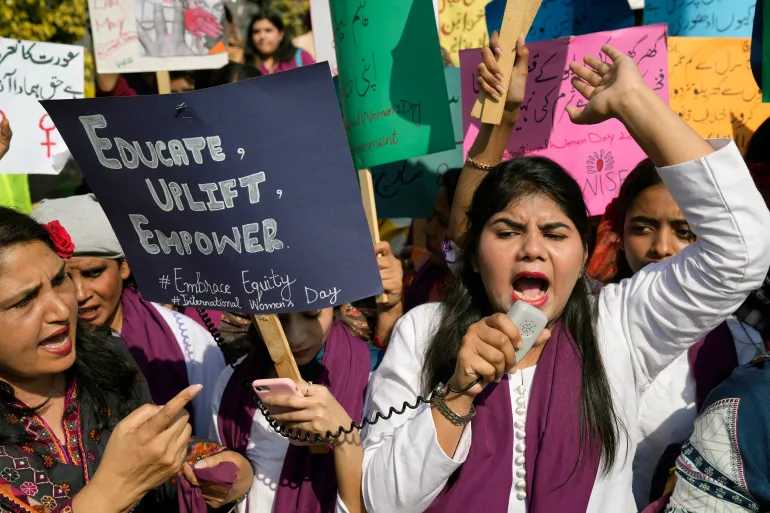
Among the 148 countries included in the World Economic Forum’s 2025 Global Gender Gap Report, Pakistan ranked last. Persistent disparities in women’s economic participation, health, education, political representation, and personal autonomy are reflected in the ranking. However, the lack of legislation safeguarding women is not Pakistan’s worst problem. It is the widening legal and enforcement divide. Thousands of women suffer from murder, domestic abuse, harassment, acid attacks, and so-called honor crimes each year, despite decades of legal improvements. Pakistan’s situation is not unique; it is a reflection of the worldwide inability to convert legislative safeguards into actual safety for women.
According to the Six Months Cruel Numbers Report published in July 2026 by the Islamabad-based child protection organization Sahil, Pakistan recorded 3,172 instances of gender-based violence in the first half of 2026 alone, including 644 murders, 514 cases of torture, 462 kidnappings, and 132 so-called honor killings. The fact that over half of these assaults took place inside the homes of the victims shows that many women are more threatened by individuals they know rather than by strangers.
The situation is not limited to Pakistan. Every ten minutes, a woman or girl is killed worldwide by a family member or intimate partner, according to UN Women. Governments in countries like Mexico, South Africa, India, and Pakistan have tightened laws safeguarding women, but millions are still at risk due to lax enforcement, institutional shortcomings, and deeply ingrained social norms. Therefore, Pakistan serves as a warning about the limitations of legislative reform without accountability rather than just a national case study.
Pakistan by the numbers
Last of 148 countries
World Economic Forum, Global Gender Gap Report 2025
|
Top 10 — closest to parity
|
Bottom 10 — furthest from parity
|
|
3,172 GBV cases, |
644 Murders |
50%+ Incidents inside |
132 Honour killings |
Women’s share of Pakistan’s labour force — World Bank, 2024
Sources: Sahil, Six Months Cruel Numbers Report (Jan–Jun 2026); World Economic Forum, Global Gender Gap Report 2025; World Bank, 2024
Laws Have Expanded. Protection Has Not.
Pakistan has passed laws addressing workplace harassment, domestic abuse, rape, acid attacks, and alleged honor killings throughout the last 20 years. On paper, the nation’s legal protections for women are among the most extensive in South Asia.
Yet legislation alone has proven insufficient.
The fact that gender-based violence still occurs shows that legal reform is just the beginning. Institutions that are able to stop abuse, look into crimes, prosecute perpetrators, and assist survivors are essential for effective protection. Laws frequently only exist on paper in areas where these institutions are still weak or inconsistent.
Pakistan’s experience provides an extremely clear illustration of this issue. Despite the expansion of legal rights brought about by new legislation, different provinces and organizations continue to implement it differently. Survivors often experience poor evidence collecting, inconsistent police responses, delayed investigations, and drawn-out legal proceedings that deter reporting before cases ever go to trial.
The result is an enforcement gap that extends beyond Pakistan and reflects a broader international problem. It is politically possible to pass legislation, but it takes persistent investment, resources, institutional transformation, and political commitment to create institutions that can consistently enforce it.
Why Does Violence Against Women Persist?
Understanding Pakistan’s gender violence crisis requires looking beyond criminal statistics. The persistence of violence is not due to a lack of laws, but rather to institutional flaws, deeply ingrained social norms, and economic disparities that continue to impede its application.
These are some of the main causes of the persistence of gender-based violence in spite of decades of legal reform:
- Weak Enforcement and Institutional Failures
Even while there are legal protections, they are not always applied consistently. Forensic evidence is not often properly gathered or stored, investigations into gender-based violence are frequently postponed, and specialist support services are still not fairly spread throughout the nation. The length of time it takes for cases to proceed through the judicial system deters survivors from taking legal action and perpetuates the idea that offenders are unlikely to face serious repercussions.
- Violence Begins at Home
The majority of gender-based violence takes place at home, despite the common belief that women are most endangered in public places.
According to Sahil’s 2026 data, over half of the incidents that were reported happened inside the houses of the victims. 27% of perpetrators were known to the victim, while husbands accounted for another significant share of reported offenders. These numbers illustrate a reality that is prevalent in many nations: the people closest to women frequently pose the biggest threat to their safety.
In many situations, reporting abuse might have dire repercussions. Many women run the risk of losing social acceptance, familial ties, financial assistance, or even child custody. Silence becomes more of a survival strategy than a true decision for some.
- Patriarchal Norms and Victim-Blaming
Legal reform is insufficient to eradicate deeply ingrained societal views.
Women who experience violence frequently face questions about their clothing, careers, relationships, or social media presence instead of attention being focused on the actions of perpetrators. When discussing high-profile incidents, the public’s focus frequently turns from calling for accountability to closely examining the victims’ actions. Such viewpoints encourage impunity, normalize violence, and deter reporting.
- Economic Dependence and Limited Opportunities
Violence against women also carries profound economic consequences.
Pakistan has one of the lowest labor force participation rates in South Asia, with women making up only about 22.8% of the workforce, according to the World Economic Forum’s 2025 Global Gender Gap Report, which cites World Bank data from 2024. Women who are economically reliant are frequently unable to leave abusive situations, take legal action, or start over on their own.
Attacks against working women in the public eye also deter women from pursuing higher education and careers. When businesses and public areas are seen as dangerous, families who are already overcoming cultural and economic obstacles may be less inclined to encourage girls to pursue professional professions.
- Parallel Justice Systems
Even though Pakistani courts have consistently declared that jirgas and other unofficial councils have no legal jurisdiction over criminal cases, decisions in some regions of the nation are nonetheless influenced by parallel justice systems. Despite legal protections, their presence erodes statutory protections and diminishes governmental authority, leaving women exposed.
Pakistan’s experience shows that enforcing current laws consistently, fairly, and before violence occurs rather than merely after tragedy has already occurred is the country’s biggest difficulty, not enacting new legislation.
Five Cases That Reveal a Systemic Pattern
The scope of gender-based violence in Pakistan is shown by statistics, but individual incidents show why the problem still exists. These incidents reveal recurrent tendencies that continue to jeopardize women’s safety despite an expanding legal framework, despite the fact that the circumstances are different. When taken as a whole, they demonstrate that systemic shortcomings in responsibility, protection, and prevention are what lead to violence.
1. Sana Yousaf: Violence After Rejection
THE PATTERN: WOMEN’S AUTONOMY, DIGITAL MISOGYNY, AND VIOLENCE FOLLOWING REJECTION
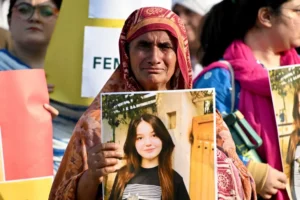
Sana’s murder serves as an example of how women who exercise their personal autonomy, whether by turning down unwanted requests or expressing themselves online, can become targets of violence. Additionally, it revealed enduring victim-blaming beliefs that continue to divert public focus from offenders to victims’ individual decisions.
2. Sarah Inam: Intimate Partner Violence
THE PATTERN: GENDER-BASED VIOLENCE TRANSCENDS EDUCATION, CLASS, AND ECONOMIC STATUS

The 2022 murder of Pakistani-Canadian economist Sarah Inam disproved the myth that women are shielded from violence by education, financial independence, or career success. On September 23, 2022, a few weeks after their marriage in Islamabad, Inam, 37, was murdered by her husband, Shahnawaz Amir, using dumbbells. In December 2023, the judge sentenced Amir to death, stating that the prosecution had established their case “beyond shadow of any doubt.” Both Pakistan and the Pakistani diaspora were startled by her case, and although the conviction showed that accountability is achievable, it also reaffirmed a harsh reality: intimate partner abuse affects women from all socioeconomic classes.
Her story serves as a reminder that poverty and illiteracy are not the only factors contributing to domestic abuse. It is a pervasive social problem that transcends geography, occupation, and class.
Khalida Chandio: Honour Killings
THE PATTERN: PARALLEL JUSTICE SYSTEMS AND THE FAILURE TO UPHOLD THE RULE OF LAW
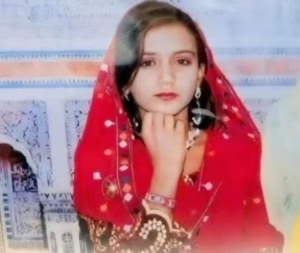
On April 10, 2026, in Burdo Chandio village, Khairpur district, Khalida Chandio, a 20-year-old woman from Sindh, was declared kari (a woman accused of bringing “dishonour” to her family or community, often through allegations of an illicit relationship or by marrying against her family’s wishes) by a local jirga (a traditional council of tribal or community elders, typically composed of men, that resolves disputes according to customary tribal practices rather than formal state law) after marrying a man of her own choosing. Although Pakistan’s courts have repeatedly ruled that jirgas have no legal authority over criminal matters, her maternal uncle carried out the jirga’s verdict, shooting her in front of roughly fifty witnesses. Arrests followed only after footage of the killing spread on social media and generated widespread public outrage, eighteen people were eventually detained, including the victim’s uncle and grandfather.
Her case serves as an example of how formal legal protections are nonetheless undermined by parallel systems of justice. Even while honor killings are illegal, women are nevertheless at risk due to lax enforcement and the power of unofficial decision-making organizations.
Dr. Mahnoor Nasir: Workplace Violence
THE PATTERN: INSTITUTIONAL FAILURES TO PREVENT HARASSMENT BEFORE IT ESCALATES
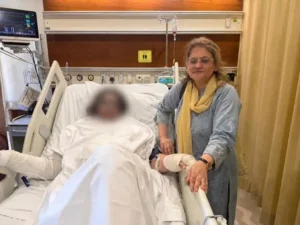
Another aspect of Pakistan’s female violence problem was brought to light by the acid attack on Dr. Mahnoor Nasir, a 29-year-old physician at Civil Hospital Quetta. On June 5, 2026, a hospital lift operator who had allegedly been harassing her for months splashed acid on her while she was working before running away. Before the culprit could be put on trial, authorities killed him during his effort to flee. Healthcare workers nationwide protested the attack, calling for improved enforcement of current rules and more robust workplace protections.
The case provides an example of how harassment is frequently disregarded until it turns into severe violence. It highlights the need for more robust institutional procedures that detect hazards early, properly handle complaints, and safeguard women before permanent harm is done.
Noor Mukadam: A Landmark Case for Justice
THE PATTERN: ACCOUNTABILITY AFTER VIOLENCE CANNOT REPLACE PREVENTION
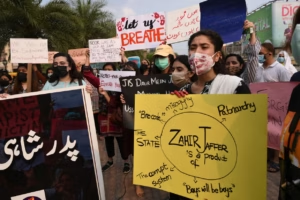
One of Pakistan’s most notable femicide incidents is the 27-year-old murder of Noor Mukadam, the daughter of a former diplomat. In July 2021, she was kidnapped, sexually assaulted, and decapitated in Zahir Jaffer’s home in Islamabad. Nearly five years later, in June 2026, the Supreme Court dismissed Jaffer’s final review petition, so terminating one of the nation’s most closely watched judicial tests of accountability for violence against women and definitively affirming his death sentence.
Noor’s case demonstrated the boundaries of justice administered following tragedy, even though the verdict marked a significant turning point for accountability. Although successful prosecutions are crucial, they cannot take the place of organizations that can recognize threats, safeguard women, and stop violence before it starts.
What Accountability Without Prevention Actually Costs
These five cases differ in circumstance, geography, and social background, yet they reveal the same underlying pattern. Women were singled out for rejecting unwelcome approaches, selecting their own partners, going after positions in the workforce, or engaging in close relationships. The underlying causes—weak enforcement of current laws, patriarchal societal norms, victim-blaming, economic reliance, institutional flaws, and the continuation of unofficial legal systems, remain very similar despite the differences in the themes.
What separates these cases is not the severity of the crime but the identity of the victim. The families of Sarah Inam and Noor Mukadam have the means and reputation to take a case all the way to the Supreme Court after years of appeals. The only reason Khalida Chandio’s case made it to court was because the state was compelled by a video. According to Sahil’s figures alone, there are hundreds of women whose cases receive national attention but who will never be arrested, much less found guilty. A legal system that primarily holds the prominent and well-connected accountable is ineffective as a deterrence; it is like a lottery, and the majority of Pakistani women do not have a winning ticket.
Over the past 20 years, Pakistan has made significant legislative advancements, passing laws that address rape, honor killings, acid assaults, workplace harassment, and domestic abuse. But the difficult part was never legislation. Building police forces that are trained to conduct impartial investigations, courts that have the resources to make decisions in a matter of months rather than years, and a state that is prepared to exert its control over informal justice systems before they act rather than after are the challenging aspects, which every government prefers to put off.
Pakistan’s poor ranking in the World Economic Forum’s Global Gender Gap Report 2025 is a sign of more serious structural issues rather than the issue itself. The true problem is the discrepancy between what the state is willing and able to provide and what the law promises. That disparity is not exclusive to Pakistan; it serves as a caution to all nations that confuse enacting laws with bringing about significant change.
The ability of women to report assault with confidence that they will be protected, heard, and get prompt justice should ultimately be used to gauge success rather than the quantity of laws in place. Gender equality will remain an ideal rather than a reality until legal rights are routinely translated into actual safety through institutional responsibility, effective enforcement, and social change.
Related stories:
Pakistani Woman Tortured to Death After Giving Birth to Fifth Daughter
Pakistan Ranks 145th Out of 146 in Global Gender Equality Index
Feminism for All: Why Men Must Engage in Decolonizing Gender Equality