
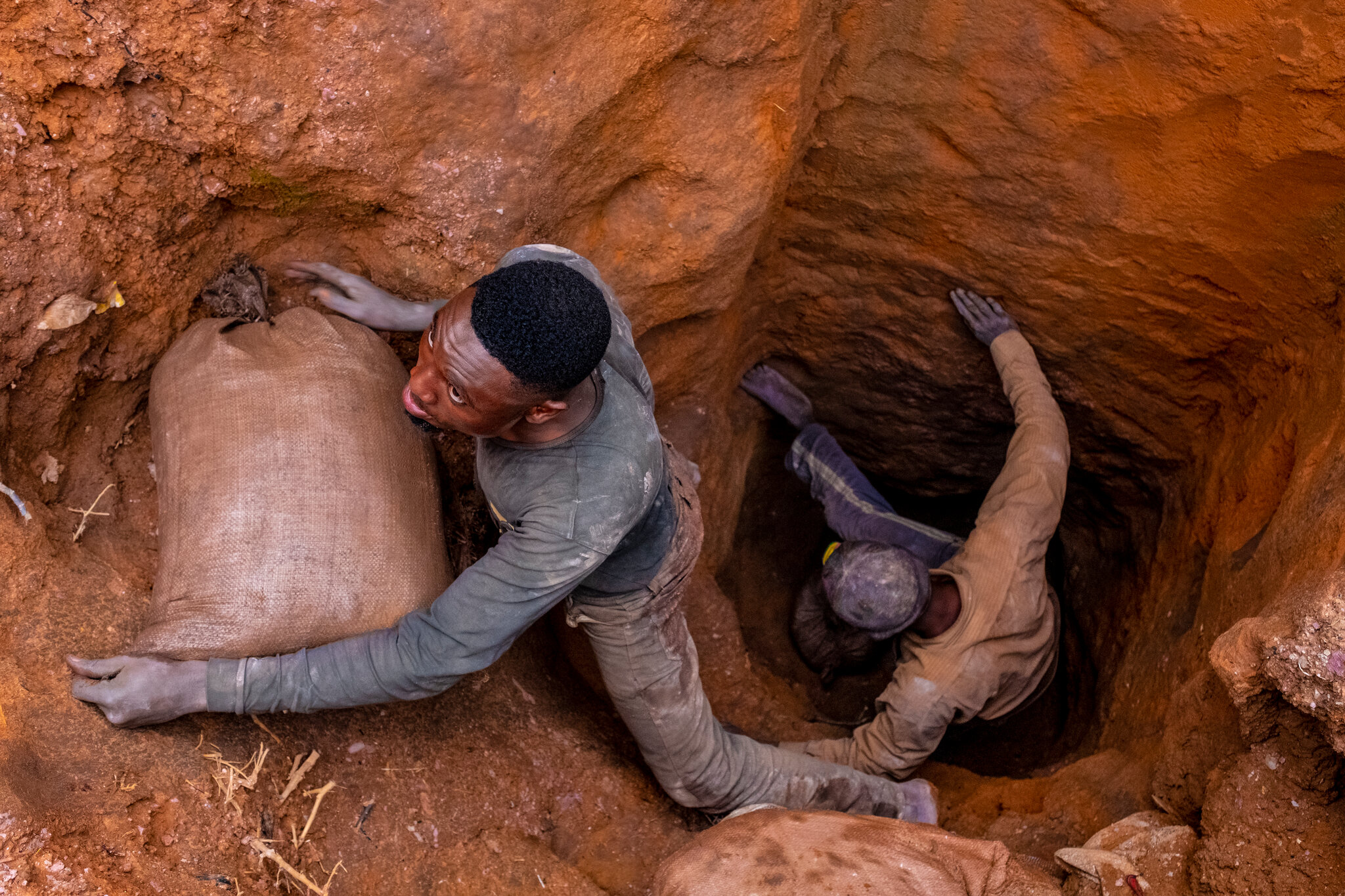
The Democratic Republic of Congo holds the world’s largest cobalt reserves and accounts for approximately 70% of global cobalt supply, a mineral essential to electric vehicle batteries, smartphones, aerospace components, and defence systems. For years, the United States allowed China to establish dominant control over that supply. That position is now changing.
In February 2026, Swiss mining giant Glencore and the US-backed Orion Critical Mineral Consortium (Orion CMC) signed a non-binding memorandum of understanding for Orion to acquire a 40% stake in two of Glencore’s largest Congolese operations: Mutanda Mining (MUMI) and Kamoto Copper Company (KCC). The combined enterprise value is approximately $9 billion.
The announcement came one day before the inaugural US Critical Minerals Ministerial hosted by Secretary of State Marco Rubio at the State Department, a timing that underlines how central this transaction is to Washington’s broader strategy to secure critical mineral supply chains currently dominated by Chinese firms.
The Orion Consortium Deal
A U.S.-backed investment group agreed to a massive new mining deal in Africa.The Orion Critical Mineral Consortium signed a $9 billion memorandum of understanding. They will buy a 40% stake in two Congolese copper and cobalt mines. The consortium is purchasing these major stakes from the Swiss mining company Glencore. These operations include the Mutanda and Kamoto Copper Company mines. This move directly challenges China’s strong dominance in the region. Additionally, U.S. firm Virtus Minerals bought Congo-focused miner Chemaf for $30 million. Virtus pledged to invest heavily in these newly acquired assets.
Key players:
- Orion Resource Partners LP — Private equity firm leading the consortium
- US International Development Finance Corporation (DFC) — US government’s development finance agency and sovereign backer of Orion CMC
- ADQ (Abu Dhabi) — UAE sovereign wealth fund and co-investor
- Glencore — Swiss mining giant selling the 40% stake; currently holds 95% of Mutanda Mining and 75% of KCC
- Gécamines — DRC state mining company; holds minority stakes in both operations
How Did This Deal Come About?
To understand the terms of this deal, the starting point is a military crisis, not a boardroom.
In February 2025, M23 rebels, widely reported to be backed by Rwanda, seized the cities of Goma and Bukavu in eastern Congo, displacing millions. Under acute military pressure, President Félix Tshisekedi wrote to President Trump offering the US access to the DRC’s critical minerals in exchange for security assistance. The Washington Accords followed in June 2025, brokering peace between the DRC and Rwanda under US mediation and paving the way for bilateral strategic partnership agreements that granted American companies preferential access to Congolese minerals.
Analysts noted the arrangement closely resembles China’s own 2007 “minerals-for-infrastructure” deal with the DRC. Washington applied the same model, but with security guarantees replacing roads and railways as the currency of exchange.
Timeline: From conflict to $9 billion deal
- February 2025 — M23 rebels seize Goma and Bukavu. President Tshisekedi offers mineral access to Trump in exchange for security assistance.
- June 2025 — Washington Accords broker DRC–Rwanda peace under US mediation. US gains preferential access to Congolese minerals.
- October 2025 — Orion CMC consortium formally launched by Orion Resource Partners and the US DFC.
- December 2025 — US–DRC Economic and Security Partnership signed. DFC pledges $1B+ in DRC mineral investment. DRC halts artisanal cobalt processing amid a corruption crackdown.
- February 2, 2026 — Trump announces Project Vault — a $12B strategic minerals stockpile backed by a $10B EXIM loan, the largest in the bank’s history.
- February 3, 2026 — Glencore and Orion CMC sign the $9B MOU. Deputy Secretary of State Christopher Landau oversees the signing.
- February 4–5, 2026 — US Critical Minerals Ministerial in Washington. 54-nation summit. $30B+ in total financing announced.
- March 2026 — China signs its own new mining agreement with the DRC. Virtus Minerals acquires Chemaf copper-cobalt operation under Project Vault framework.
- April 2026 — DRC raises planned copper sales to the US to 500,000 tonnes — a fivefold increase from its January commitment.
Why Cobalt, Why Now?
Cobalt is required for lithium-ion battery cathodes in electric vehicles, for defence and aerospace systems, and increasingly for AI hardware infrastructure. The DRC supplies approximately 70% of global cobalt. Control over Congolese cobalt means significant influence over supply chains for the next generation of technology and defence equipment.
China recognised this early and invested systematically: it now controls around 70% of global rare earth mining and approximately 90% of global cobalt processing capacity. By the time Trump returned to office in January 2025, Chinese firms controlled about 80% of Congo’s mining output. Washington has signalled its intent to use price floor mechanisms as a market stabilisation tool to protect Western investment returns.
Congo pushes back
A collective of Congolese lawyers and human rights defenders filed a petition at the Constitutional Court of Congo, arguing the agreement was imposed without parliamentary ratification. While the judicial system can take steps the executive system is still largely dependent on the West.
“The interests of the Congolese people were not defended in this agreement. One cannot build security while destroying the environment and violating the rights of local communities.”- — Congolese civil society representative, February 2026
Structural Risks in the Deal
Several significant risks remain.
The MOU is non-binding. Final terms, regulatory approvals, due diligence, and financing arrangements are still ahead. Nothing is legally settled.
Security foundations are fragile. The deal was built on a security agreement signed under military pressure. If the M23 conflict resurges — as it has repeatedly over the past decade — the foundations of the deal are significantly weakened.
Cobalt price volatility. Sustained oversupply from Indonesian nickel-cobalt operations and uneven EV demand continue to create uncertainty, complicating long-term investment projections.
The DRC’s new cobalt reserve. The DRC has established a strategic cobalt reserve managed by regulator ARECOMS, signalling that Kinshasa intends to exercise more direct control over supply. This may complicate production access assumptions for US buyers.
The Shift from Physical to Financial Control
Even though European empires long ago packed up their flags and left Africa, the continent is still trapped in a system that looks a lot like economic colonialism. Instead of foreign governors, external powers use massive debt, one-sided trade deals, and corporate contracts to control the continent’s riches. Take the Democratic Republic of Congo as a prime example: global superpowers like the U.S. and China are aggressively fighting over its copper and cobalt, treating the land like an open-air vault.
Neo-colonialism at the rise
Africa is stuck in a frustrating cycle where it exports cheap raw minerals to the West and Asia, only to buy back expensive, finished tech like smartphones and electric vehicles. When foreign nations build infrastructure there, like the $553 million Lobito Corridor railway, it isn’t out of altruism; it’s to build a faster pipeline to ship Africa’s wealth out of the continent. By controlling the supply chains and keeping African nations financially dependent, foreign powers have successfully kept the old colonial status quo alive without ever having to put boots on the ground.
Related Stories:
Millions of people died in Congo because of western world’s appetite for cobalt
The Dark Side of Green Energy: At What Human Cost in Congo?
UAE Signs $1.9bn Deal to Develop Mines in Congo’s Turbulent East