
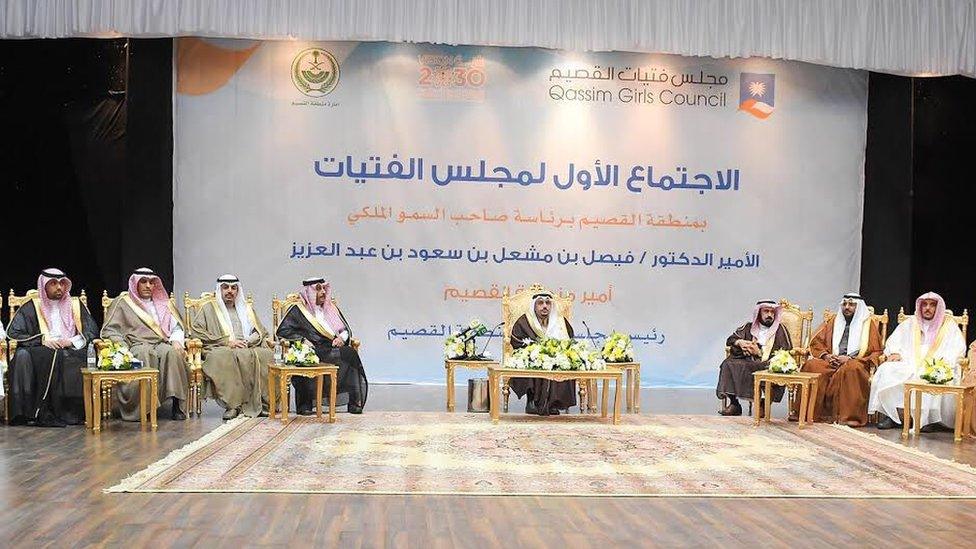
In 2012, Saudi Arabia organized a women conference in Qassim University, which was attaended only by men. The conference was themed around the role of women in society and was attended by male delegates from almost 15 countries. A picture of the event was published in the Okaz newspaper which showed only men sitting and attending the event. The image sparked conversations on social media about the the country’s performative commitment to women’s rights while failing to integrate these claims into actions.
Another similar incident occurred in 2017, when an inaugural girls’ council was launched on stage by 13 men. The female members were reportedly in an adjacent room and connected via a live video link.
Gender segregation or political exclusion
The controversy reveals a deeper structural pattern in society where women are discussed as subjects of reform, rather than acting as active participants in bringing reform. The organizers of the event defended the decision stating that a few women attended the event from a separate building due to gender segregation norms. Nonetheless, it only deepened critcism since women were physically absent from debates concerning their lives. The physical absenteeism of women points towards the political exclsuion of women.
The event brought attention to the discrepancy between official discourse and experienced reality on a global scale. The incident revealed how institutional practices still reflected strict patriarchal control at a time when Saudi Arabia was pushing for gradual modernisation. However, the response showed how digital media is becoming more effective at holding governments responsible; a single image started to have more sway than official declarations. In the end, the conference continues to be a potent case study of symbolic representation, showing that real inclusion of women in decision-making venues is just as important for significant advancements in women’s rights as policies and conferences.
Vision 2030: Moving towards a better future?
However, since these events Saudi Arabia has made major progress in ensuring the equality of women especially in public events and spaces. According to Vision 2030, women have been allowed to travel without a male counterpart, they have been granted driving licenses to drive independently. In addition, women’s participation in the workforce has also been increased from 22% to 30%. While these changes represent a positive trend towards inclusion of women in society, there is still a long way to go.
Related Stories:
Saudi Arabia Denies Plans to Allow Alcohol Sales Ahead of 2034 World Cup