Friday, April 24, 2026
Observer Diplomat
  • Home
  • Regions
    • US & Canada
    • China
    • Latin America & Caribbean
    • Middle East
    • Central Asia
    • South Asia
    • East Asia & The Pacific
    • Africa
    • Europe
  • Topics
    • Opinion
    • Society
    • Security
    • Economy
    • Diplomacy
    • Politics
    • Environment
  • More
    • National Days
    • Podcasts
    • Interviews
    • Books and Reviews
    • Heads of Mission In Pakistan
    • Events
  • Magazine
  • About
    • Subscription
    • Newsletter
    • About Us
    • Write For Us
    • Advertise
    • Privacy Policy
    • Contact Us
No Result
View All Result
  • Home
  • Regions
    • US & Canada
    • China
    • Latin America & Caribbean
    • Middle East
    • Central Asia
    • South Asia
    • East Asia & The Pacific
    • Africa
    • Europe
  • Topics
    • Opinion
    • Society
    • Security
    • Economy
    • Diplomacy
    • Politics
    • Environment
  • More
    • National Days
    • Podcasts
    • Interviews
    • Books and Reviews
    • Heads of Mission In Pakistan
    • Events
  • Magazine
  • About
    • Subscription
    • Newsletter
    • About Us
    • Write For Us
    • Advertise
    • Privacy Policy
    • Contact Us
No Result
View All Result
Observer Diplomat
No Result
View All Result
Home Middle East

Israel Launches Massive Airstrikes on Beirut, Targeting Hezbollah Leadership

News Desk by News Desk
September 30, 2024
in Middle East, Security
0
Israel Launches Massive Airstrikes on Beirut, Targeting Hezbollah Leadership
Share on FacebookShare on Twitter

Israel has conducted massive airstrikes on the Haret Hreik area in Dahiye, a southern suburb of Beirut, Lebanon. The attack, which took place on September 27, 2024, came shortly after Israeli Prime Minister Benjamin Netanyahu’s address to the UN General Assembly in New York. These massive airstrikes have not only caused significant destruction but have also raised fears of a broader conflict in the already volatile Middle East region.

The Scale and Impact of the Attack

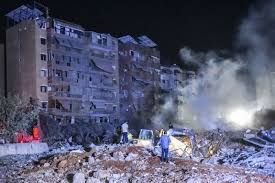
The Israeli Air Force’s operation was characterized by its sheer magnitude and destructive power. Reports indicate that at least six buildings were completely leveled in the densely populated area of Dahiye. The Israeli Broadcasting Corporation revealed that the munitions used were US-made MK84 ‘bunker-buster’ bombs, each weighing one ton. These powerful explosives are designed to penetrate fortified underground structures, suggesting that Israel believed it was targeting high-value, well-protected assets.

The human cost of this attack has been severe. Initial reports from the Lebanese Ministry of Health stated that at least two people were killed and 76 wounded. However, these numbers are expected to rise significantly as rescue efforts continue. The Lebanese Civil Defense has been working tirelessly to extinguish fires, evacuate the injured, and retrieve bodies from under the rubble. The full extent of the casualties may not be known for days, given the scale of the destruction.

Targeting Hezbollah Leadership: Massive AirStrikes

Israeli media reports suggest that the primary target of these airstrikes was none other than Hezbollah Secretary-General Hassan Nasrallah. This claim adds a new dimension to the attack, potentially signaling a shift in Israel’s strategy towards more high-profile targets. The Israeli army stated that the target was an underground “central Hezbollah headquarters,” though they did not explicitly confirm targeting Nasrallah.

Hezbollah, for its part, has denied that Nasrallah was present at the targeted location. Muhammad Afif, a Hezbollah media relations official, stated to Iranian TV that “His Eminence the Secretary-General is fine and well, and was not at the targeted location.” Additionally, Tasnim News Agency, citing Lebanese sources, reported that no senior leaders of Hezbollah were killed in the attack. However, the Israeli newspaper Maariv, citing Israeli officials, claimed that the assassination was “successful,” adding to the conflicting narratives surrounding the operation.

International Reactions and Implications

The massive airstrikes on Beirut have drawn swift international attention and concern. The United States, Israel’s closest ally, has distanced itself from the operation. Deputy Pentagon Press Secretary Sabrina Singh told reporters that “the United States was not involved in this operation, and we had no advanced warning.” However, she did note that Defense Secretary Lloyd Austin was in contact with his Israeli counterpart Yoav Gallant “as the operation was already underway,” raising questions about the extent of US knowledge and potential tacit approval.

The attack has prompted immediate diplomatic responses. The British government, in a notable move, called on UK nationals in Lebanon to leave immediately. This urgent advisory underscores the perceived risk of further escalation and potential retaliation by Hezbollah or its allies.

The timing of the airstrikes, coming shortly after Netanyahu’s UN speech, has led to speculation about Israel’s broader strategic intentions. It may be seen as a demonstration of resolve and capability, possibly aimed at deterring further actions by Hezbollah or sending a message to other regional adversaries.

Potential for Regional Escalation

These massive airstrikes represent a significant escalation in the ongoing tensions between Israel and Hezbollah. The attack on a densely populated area of Beirut, coupled with the alleged targeting of Hezbollah’s top leadership, crosses previous red lines in the conflict. This raises serious concerns about potential retaliation from Hezbollah and its allies, including Iran.

The risk of a wider regional conflict has increased substantially. Other actors in the region, such as Syria and various Palestinian factions, may feel compelled to respond or increase their own operations against Israel. The international community, particularly the United States and European nations, faces the challenge of preventing further escalation while maintaining their strategic interests in the region.

The massive airstrikes conducted by Israel on Beirut mark a critical juncture in Middle Eastern geopolitics. As rescue efforts continue and the full impact of the attack becomes clear, the international community watches closely for potential retaliatory actions and further escalation. The alleged targeting of Hezbollah’s leadership, if confirmed, could lead to a new phase in the long-standing conflict between Israel and its northern neighbor. As tensions soar and the threat of a wider regional war looms, diplomatic efforts to contain the situation will be crucial in the coming days and weeks. The repercussions of these airstrikes are likely to reverberate throughout the Middle East, potentially reshaping alliances and conflict dynamics in this volatile region.

Related News

  1. Israel Claims to Have Killed Hezbollah Leader Hassan Nasrallah in Beirut Strike
Previous Post

Netanyahu Strengthens Coalition as Gideon Saar Joins Cabinet

Next Post

Deadly Wildfires Ravage Central Greece, Claiming Lives Amid Climate Crisis

News Desk

News Desk

Next Post
Deadly Wildfires Ravage Central Greece, Claiming Lives Amid Climate Crisis

Deadly Wildfires Ravage Central Greece, Claiming Lives Amid Climate Crisis

  • Trending
  • Comments
  • Latest
Saudi Arabia Bans 1-Year Visit Visa for 14 Countries to Curb Illegal Hajj Pilgrims

Saudi Arabia Bans 1-Year Visit Visa for 14 Countries to Curb Illegal Hajj Pilgrims

February 4, 2025
Dublin’s Closed Israeli Embassy Becomes Palestinian Museum

Dublin’s Closed Israeli Embassy Becomes Palestinian Museum

December 27, 2024
Iraq 20 Years Later: What Really Happened and Who’s Still Accountable?

Iraq 20 Years Later: What Really Happened and Who’s Still Accountable?

March 21, 2025
Newly declassified U.S. documents show that the Dalai Lama was on CIA payroll

Newly declassified U.S. documents show that the Dalai Lama was on CIA payroll

November 28, 2025
“Arakan Army”: A Greater Threat Than the Junta and a Dead End for Rohingya Rights.

“Arakan Army”: A Greater Threat Than the Junta and a Dead End for Rohingya Rights.

3
Women in Afghan media continue brave mission to keep our stories alive

Women in Afghan media continue brave mission to keep our stories alive

1
Interview of Foreign Minister of Pakistan with Chinese Journalist

Interview of Foreign Minister of Pakistan with Chinese Journalist

0
Breakfast celebration in Turkish Embassy Islamabad

Breakfast celebration in Turkish Embassy Islamabad

0
How The New Taliban Code Dehumanizes Women

How The New Taliban Code Dehumanizes Women

February 13, 2026
Donald Trump and Goebbels with gifted nobel prizes.

Donald Trump Gifted Nobel Peace Prize

February 13, 2026
Mali Removes French Colonial History from Schools to Reclaim National Identity

Mali Removes French Colonial History from Schools to Reclaim National Identity

December 5, 2025
Iraq Increases Male Control Over Marriage, Divorce, and Custody

Iraq Increases Male Control Over Marriage, Divorce, and Custody

December 5, 2025

Recent News

How The New Taliban Code Dehumanizes Women

How The New Taliban Code Dehumanizes Women

February 13, 2026
Donald Trump and Goebbels with gifted nobel prizes.

Donald Trump Gifted Nobel Peace Prize

February 13, 2026
Mali Removes French Colonial History from Schools to Reclaim National Identity

Mali Removes French Colonial History from Schools to Reclaim National Identity

December 5, 2025
Iraq Increases Male Control Over Marriage, Divorce, and Custody

Iraq Increases Male Control Over Marriage, Divorce, and Custody

December 5, 2025

Observer Diplomat is a preeminent International Affairs and Diplomatic Magazine distinguished by its women-led editorial team. Committed to delivering in-depth analyses of global events, we offer a unique and nuanced perspective on international news. Our magazine serves as a beacon of knowledge, presenting a comprehensive understanding of the intricate dynamics shaping the world today.


REGIONS

  • Africa
  • Central Asia
  • China
  • East Asia & The Pacific
  • Europe
  • North America
  • Russia
  • South Asia

TOPICS

  • Diplomacy
  • Economy
  • Environment
  • Events
  • Opinion
  • Podcasts
  • Politics

ABOUT

  • Subscription
  • Newsletter
  • About Us
  • Write For Us
  • Privacy Policy
  • Advertise
  • Contact Us

Follow us

  • About
  • Advertise
  • Privacy & Policy
  • Contact

© 2023 observerdiplomat

No Result
View All Result
  • Home
  • Regions
    • US & Canada
    • China
    • Latin America & Caribbean
    • Middle East
    • Central Asia
    • South Asia
    • East Asia & The Pacific
    • Africa
    • Europe
  • Topics
    • Opinion
    • Society
    • Security
    • Economy
    • Diplomacy
    • Politics
    • Environment
  • More
    • National Days
    • Podcasts
    • Interviews
    • Books and Reviews
    • Heads of Mission In Pakistan
    • Events
  • Magazine
  • About
    • Subscription
    • Newsletter
    • About Us
    • Write For Us
    • Advertise
    • Privacy Policy
    • Contact Us

© 2023 observerdiplomat