
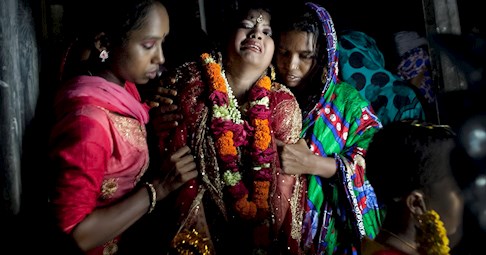
Forced marriages remain a critical human rights issue in South Asia, deeply rooted in entrenched cultural norms and societal pressures. In many communities, these marriages are driven by traditional beliefs and the desire to uphold family honor, often disregarding the autonomy and well-being of individuals, particularly women.
The recent case of Ruqia Haidari, 21, who was killed by her husband after an arranged marriage, vividly illustrates the grave consequences of forced marriages. Sakina Muhammad Jan, mother of Ruqia who imposed the marriage has been sentenced to 25 years in prison.This tragic case highlights not only the severe personal and social repercussions of forced marriages but also the extreme dangers inherent in such harmful practices.
Forced marriages in South Asia frequently lead to severe repercussions, including violence and abuse, as individuals trapped in these arrangements face immense pressure and lack of support. Addressing this grave issue requires a concerted effort to implement and enforce strong legal protections and to challenge and transform the cultural attitudes that perpetuate such practices.
The Case of Ruqia’s Forced Marriage
Sakina Muhammad Jan, originally from Afghanistan, residing in Australia forced her daughter, Ruqia Haidari, into marrying 26-year-old Afghan refugee and Uber driver Mohammad Ali Halimi, despite Ruqia’s objections. After a previous arranged marriage ended in divorce, Ruqia was considered “bewa” (having lost her value) by the Hazara community. Jan arranged the second marriage in an attempt to restore the family’s reputation. Tragically, Halimi killed Ruqia five months after their wedding and is now serving a life sentence for her murder.
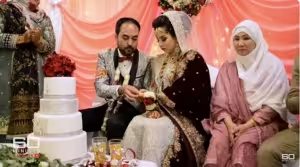
In May, a jury found Jan guilty of forcing her daughter into marriage, making her the first person in Australia to be sentenced under this charge since its criminalization over a decade ago. Judge Dalziel criticized Jan for abusing her power as a mother, stating that, although Jan believed she was acting in Ruqia’s best interests, she was not. Jan cried, and a family member collapsed as she was taken into custody. About 30 minutes later, she was transported to the hospital by ambulance.
Jan will be released from custody on a recognisance order after 12 months but faces deportation to Afghanistan once released.
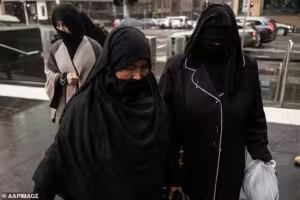
This case emphasizes the importance of cultural education and community outreach to challenge deeply ingrained beliefs that perpetuate forced marriages. Legal reforms must be paired with efforts to change societal attitudes, ensuring that future generations are protected from similar fates.
As the first person in Australia to be sentenced for forcing someone into marriage under the country’s criminal laws, Jan’s conviction sends a strong message about the seriousness of this issue. However, this must be the beginning of a broader effort to protect vulnerable individuals and ensure that the rights and safety of women and girls are upheld. The global community must also recognize the need for international cooperation in addressing the root causes of forced marriages and providing support to those at risk
Forced marriages Legal Framework and Regional Context
Forced marriages are a persistent issue across South Asia, including Afghanistan, Pakistan, India, Bangladesh, and Nepal. Despite legal frameworks aimed at preventing these practices, enforcement remains weak. Laws across the region, despite setting up legal frameworks, have failed to control the consistently destabilizing circumstances posing a danger to women and girls.
- Afghanistan: The Afghan Family Law sets the minimum legal age for marriage at 16 for girls, but forced marriages remain prevalent due to strong patriarchal traditions.
- Pakistan: The Child Marriage Restraint Act of 1929 sets the minimum age for marriage at 16 for girls and 18 for boys. However, this law is frequently violated, with enforcement often hindered by cultural norms.
- India: The Prohibition of Child Marriage Act (2006) aims to prevent child marriages but struggles with enforcement, especially in rural areas where traditional practices are strong.
- Bangladesh: The Child Marriage Restraint Act of 2017 prohibits marriage before the age of 18 but is often bypassed in areas affected by poverty and natural disasters.
- Nepal: Nepal’s laws set the legal age for marriage at 20, but enforcement is inconsistent, particularly in rural communities.
Data and Statistics of Forced Marriages
Forced marriages affect thousands of individuals annually across South Asia. For example:
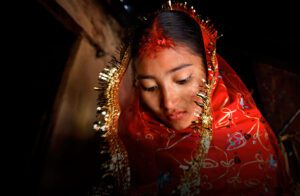
- In Pakistan, reports estimate that up to 1,000 forced marriages occur each year, with many involving minors.
- In India, despite legal prohibitions, a significant number of girls are married off before reaching adulthood, often to settle debts or disputes.
Addressing the Crisis
To combat the issue of forced marriages effectively, a multi-pronged approach is necessary:
- Legislative Reforms: Strengthening and enforcing laws against forced and child marriages is crucial. This includes amending existing laws to increase the legal age for marriage and ensuring strict penalties for violators.
- Public Awareness: Educational campaigns should focus on raising awareness about the rights of individuals and the detrimental impacts of forced marriages. Engaging community leaders and educators can help challenge and change harmful societal norms.
- Support Systems: Establishing robust support networks for victims, including shelters, legal aid, and psychological support, is vital. These systems provide safe havens and help individuals rebuild their lives after escaping forced marriages.
Call To Action
The tragic consequences of forced marriages highlight the need for urgent action. South Asian countries must prioritize individual rights over societal pressures to create a safer and more just environment. Collaborative efforts from local governments, international organizations, and community groups are essential to eradicate this practice and uphold human dignity and autonomy.
It is imperative that local governments take decisive steps to enforce legal protections against forced marriages, ensuring that those who perpetuate these abuses are held accountable. Additionally, international organizations and community groups must work collaboratively to support and empower individuals at risk, providing resources and education to challenge and change the norms that sustain these practices.
Eradicating forced marriages will not be achieved through isolated efforts but through a concerted and sustained approach involving all sectors of society. This includes legal reforms, public awareness campaigns, and support systems for survivors. By joining forces and advocating for systemic change, we can uphold the fundamental rights of all individuals, fostering an environment where freedom, dignity, and equality are not just ideals but realities for everyone.
To read more about South Asian marriage laws, read latest report of UN:
UN on child marriage and its implications.
Related Stories:
Afghan Women’s Rights Under Threat: Taliban’s Ongoing Restrictions Unveiled in UN Report.