Friday, April 24, 2026
Observer Diplomat
  • Home
  • Regions
    • US & Canada
    • China
    • Latin America & Caribbean
    • Middle East
    • Central Asia
    • South Asia
    • East Asia & The Pacific
    • Africa
    • Europe
  • Topics
    • Opinion
    • Society
    • Security
    • Economy
    • Diplomacy
    • Politics
    • Environment
  • More
    • National Days
    • Podcasts
    • Interviews
    • Books and Reviews
    • Heads of Mission In Pakistan
    • Events
  • Magazine
  • About
    • Subscription
    • Newsletter
    • About Us
    • Write For Us
    • Advertise
    • Privacy Policy
    • Contact Us
No Result
View All Result
  • Home
  • Regions
    • US & Canada
    • China
    • Latin America & Caribbean
    • Middle East
    • Central Asia
    • South Asia
    • East Asia & The Pacific
    • Africa
    • Europe
  • Topics
    • Opinion
    • Society
    • Security
    • Economy
    • Diplomacy
    • Politics
    • Environment
  • More
    • National Days
    • Podcasts
    • Interviews
    • Books and Reviews
    • Heads of Mission In Pakistan
    • Events
  • Magazine
  • About
    • Subscription
    • Newsletter
    • About Us
    • Write For Us
    • Advertise
    • Privacy Policy
    • Contact Us
No Result
View All Result
Observer Diplomat
No Result
View All Result
Home Middle East

Iran Approves Six Presidential Candidates After Raisi’s Death

News Desk by News Desk
June 28, 2024
in Middle East, Politics
0
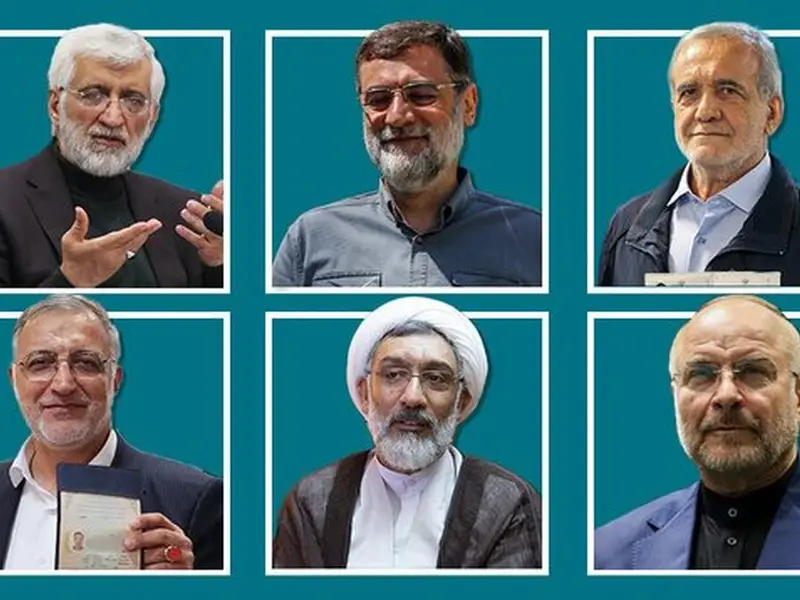
Iran Approves Six Presidential Candidates After Raisi’s Death
Share on FacebookShare on Twitter

Iran’s Guardian Council, responsible for overseeing elections and legislation, has approved six candidates to run in the presidential elections set for later this month, following the tragic death of President Ebrahim Raisi in a helicopter crash, as reported by Iran’s State TV.

Among the approved candidates is Mohammad Baqer Qalibaf, the hardline Speaker of Parliament and former commander of the Revolutionary Guards. Qalibaf is joined by Saeed Jalili, a conservative who formerly served as Iran’s chief nuclear negotiator and ran the office of Supreme Leader Ayatollah Ali Khamenei for four years. Another candidate is Alireza Zakani, Tehran’s conservative mayor.

The list also includes Masoud Pezeshkian, a reformist lawmaker, Mostafa Pourmohammadi, a hardliner and former interior minister, and Amir-Hossein Ghazizadeh Hashemi, a conservative politician. State TV announced that with the final list of candidates confirmed, their electoral campaigns would officially commence. The election is scheduled for June 28.

The Guardian Council notably disqualified hardline former President Mahmoud Ahmadinejad and former parliamentary speaker Ali Larijani, a prominent conservative. The disqualifications have sparked discussions about the political landscape and the future direction of Iran’s leadership.

Political Background

Mohammad Baqer Qalibaf, a key figure in Iran’s hardline faction, brings significant military and political experience. His previous roles include the head of the Revolutionary Guards’ Air Force and the mayor of Tehran. Saeed Jalili, another major conservative figure, is known for his staunch positions during nuclear negotiations and his close association with the Supreme Leader.

Alireza Zakani, serving as Tehran’s mayor, has been an influential figure in the conservative camp, advocating for strict adherence to revolutionary principles. In contrast, Masoud Pezeshkian represents the reformist faction, advocating for more progressive policies and political openness.

Mostafa Pourmohammadi, known for his hardline views, has a controversial past, including his role in the 1988 executions of political prisoners. Amir-Hossein Ghazizadeh Hashemi, a less prominent conservative figure, has focused on domestic policies and parliamentary affairs.

Statements and Reactions

The Guardian Council’s decisions have elicited various responses from political figures and analysts. The disqualification of Mahmoud Ahmadinejad and Ali Larijani has been particularly controversial. Ahmadinejad, known for his populist rhetoric and confrontational foreign policy, has a significant following among hardline supporters. Larijani, on the other hand, represents a more moderate conservative faction and has been a prominent figure in Iran’s political landscape for decades.

Public reactions have been mixed. Some citizens express concern over the limited choices, fearing a lack of diversity in political thought. Reformist supporters worry about the exclusion of progressive candidates, while hardline supporters are divided over the disqualification of figures like Ahmadinejad.

International Perspective

The upcoming election is significant not only for Iran’s domestic politics but also for its international relations. The candidates’ stances on key issues like the nuclear deal, relations with the West, and regional policies will shape Iran’s future interactions on the global stage.

Saeed Jalili’s candidacy is particularly noteworthy for international observers, given his history as a tough negotiator in nuclear talks. His potential presidency could signal a more rigid stance in future negotiations, impacting the already delicate relationship between Iran and Western powers.

Campaign Dynamics

As the candidates prepare for their campaigns, the political atmosphere in Iran is charged with anticipation and uncertainty. Each candidate will need to navigate a complex landscape of public opinion, party loyalties, and geopolitical considerations.

Mohammad Baqer Qalibaf is likely to emphasize his military and administrative experience, presenting himself as a strong leader capable of guiding Iran through its current challenges. Saeed Jalili will likely focus on his commitment to the Supreme Leader and his track record in defending Iran’s nuclear program.

Alireza Zakani may leverage his role as Tehran’s mayor to highlight his accomplishments in urban management and conservative values. Masoud Pezeshkian, as the sole reformist, will advocate for change and modernization, appealing to younger and more progressive voters.

Future Implications

The outcome of this election will have far-reaching implications for Iran’s political trajectory and its role in the region. The new president will face significant challenges, including economic sanctions, regional conflicts, and internal demands for reform.

Internationally, the election results will be closely monitored by governments and analysts, as they will influence Iran’s foreign policy and its approach to international agreements and conflicts. The chosen leader’s policies will shape Iran’s economic recovery, social stability, and geopolitical strategies.

Conclusion

Iran’s Guardian Council has approved six candidates to run in the upcoming presidential election, set against the backdrop of President Ebrahim Raisi’s untimely death. The approved candidates reflect a range of conservative and reformist views, setting the stage for a critical electoral contest. As campaigns commence, the political landscape in Iran remains dynamic, with significant implications for both domestic and international spheres.

Previous Post

Tensions Rise in Asia Pacific as Largest Maritime Drills Begin

Next Post

Pakistan Accuses US of Interference Over Election Scrutiny Resolution

News Desk

News Desk

Next Post
Pakistan Accuses US of Interference Over Election Scrutiny Resolution

Pakistan Accuses US of Interference Over Election Scrutiny Resolution

  • Trending
  • Comments
  • Latest
Saudi Arabia Bans 1-Year Visit Visa for 14 Countries to Curb Illegal Hajj Pilgrims

Saudi Arabia Bans 1-Year Visit Visa for 14 Countries to Curb Illegal Hajj Pilgrims

February 4, 2025
Dublin’s Closed Israeli Embassy Becomes Palestinian Museum

Dublin’s Closed Israeli Embassy Becomes Palestinian Museum

December 27, 2024
Iraq 20 Years Later: What Really Happened and Who’s Still Accountable?

Iraq 20 Years Later: What Really Happened and Who’s Still Accountable?

March 21, 2025
Newly declassified U.S. documents show that the Dalai Lama was on CIA payroll

Newly declassified U.S. documents show that the Dalai Lama was on CIA payroll

November 28, 2025
“Arakan Army”: A Greater Threat Than the Junta and a Dead End for Rohingya Rights.

“Arakan Army”: A Greater Threat Than the Junta and a Dead End for Rohingya Rights.

3
Women in Afghan media continue brave mission to keep our stories alive

Women in Afghan media continue brave mission to keep our stories alive

1
Interview of Foreign Minister of Pakistan with Chinese Journalist

Interview of Foreign Minister of Pakistan with Chinese Journalist

0
Breakfast celebration in Turkish Embassy Islamabad

Breakfast celebration in Turkish Embassy Islamabad

0
How The New Taliban Code Dehumanizes Women

How The New Taliban Code Dehumanizes Women

February 13, 2026
Donald Trump and Goebbels with gifted nobel prizes.

Donald Trump Gifted Nobel Peace Prize

February 13, 2026
Mali Removes French Colonial History from Schools to Reclaim National Identity

Mali Removes French Colonial History from Schools to Reclaim National Identity

December 5, 2025
Iraq Increases Male Control Over Marriage, Divorce, and Custody

Iraq Increases Male Control Over Marriage, Divorce, and Custody

December 5, 2025

Recent News

How The New Taliban Code Dehumanizes Women

How The New Taliban Code Dehumanizes Women

February 13, 2026
Donald Trump and Goebbels with gifted nobel prizes.

Donald Trump Gifted Nobel Peace Prize

February 13, 2026
Mali Removes French Colonial History from Schools to Reclaim National Identity

Mali Removes French Colonial History from Schools to Reclaim National Identity

December 5, 2025
Iraq Increases Male Control Over Marriage, Divorce, and Custody

Iraq Increases Male Control Over Marriage, Divorce, and Custody

December 5, 2025

Observer Diplomat is a preeminent International Affairs and Diplomatic Magazine distinguished by its women-led editorial team. Committed to delivering in-depth analyses of global events, we offer a unique and nuanced perspective on international news. Our magazine serves as a beacon of knowledge, presenting a comprehensive understanding of the intricate dynamics shaping the world today.


REGIONS

  • Africa
  • Central Asia
  • China
  • East Asia & The Pacific
  • Europe
  • North America
  • Russia
  • South Asia

TOPICS

  • Diplomacy
  • Economy
  • Environment
  • Events
  • Opinion
  • Podcasts
  • Politics

ABOUT

  • Subscription
  • Newsletter
  • About Us
  • Write For Us
  • Privacy Policy
  • Advertise
  • Contact Us

Follow us

  • About
  • Advertise
  • Privacy & Policy
  • Contact

© 2023 observerdiplomat

No Result
View All Result
  • Home
  • Regions
    • US & Canada
    • China
    • Latin America & Caribbean
    • Middle East
    • Central Asia
    • South Asia
    • East Asia & The Pacific
    • Africa
    • Europe
  • Topics
    • Opinion
    • Society
    • Security
    • Economy
    • Diplomacy
    • Politics
    • Environment
  • More
    • National Days
    • Podcasts
    • Interviews
    • Books and Reviews
    • Heads of Mission In Pakistan
    • Events
  • Magazine
  • About
    • Subscription
    • Newsletter
    • About Us
    • Write For Us
    • Advertise
    • Privacy Policy
    • Contact Us

© 2023 observerdiplomat