

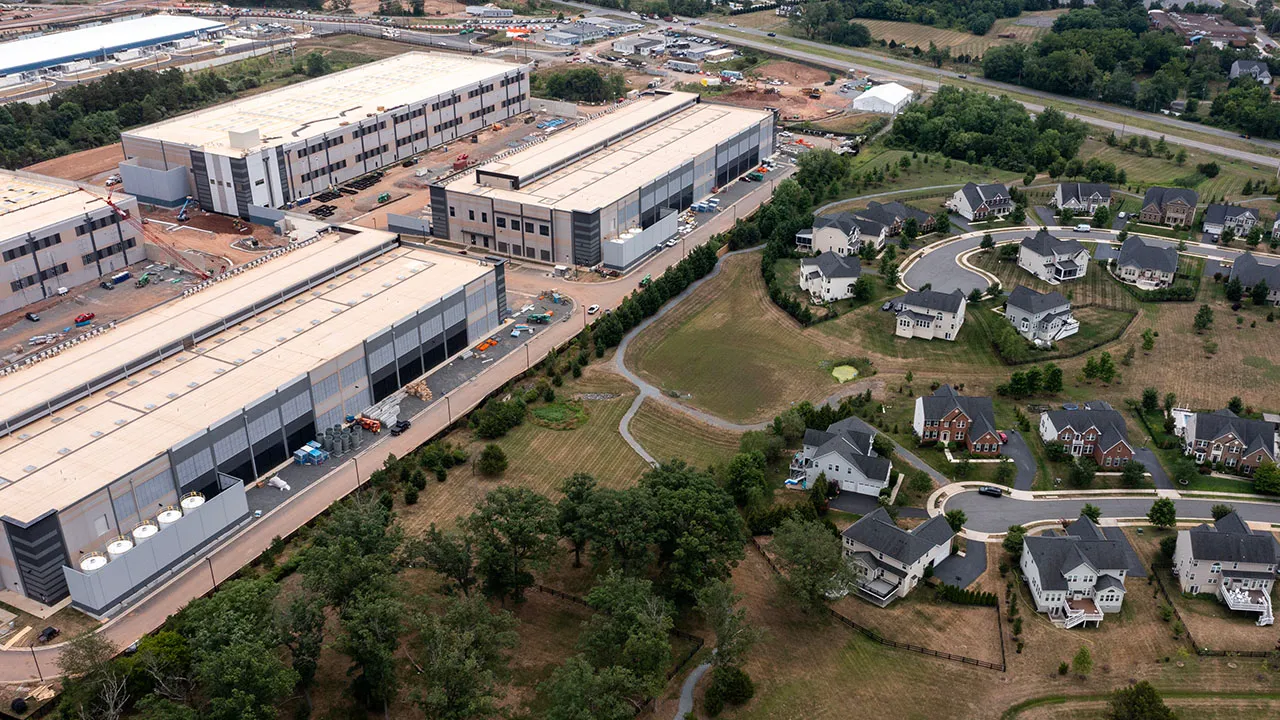
The global infrastructure powering AI is driving an unprecedented environmental toll that extends far beyond carbon emissions. A new report from United Nations University warns that the global expansion of data centers , driven largely by artificial intelligence, has reached an unprecedented scale, with major implications for energy systems, water resources, and climate goals.
According to the report, data centers consumed approximately 448 trillion watt-hours of electricity last year, a level higher than all but the world’s ten largest economies. According the study, data centers could consume 945 terawatt-hours of electricity annually by 2030, nearly tripling the combined usage of Pakistan, Bangladesh, and Nigeria. As AI adoption accelerates, this demand is expected to rise sharply.
AI driving a surge in global energy demand
The report highlights that the environmental footprint of data centers is no longer a secondary concern — it is becoming a central driver of global energy consumption.
Key projections include:
- Total data center energy, water, and carbon impact doubling by 2030
- AI workloads growing from ~20% of data center energy use today to ~40% by 2030
- Electricity demand reaching levels comparable to Japan’s national consumption
- Water usage rising to volumes equivalent to supplying all of Sub-Saharan Africa for a year
These figures point to a rapidly expanding infrastructure layer behind AI systems that is increasingly difficult to reconcile with global sustainability targets.
Big Tech’s infrastructure race
The expansion is being led by major technology companies, including Google (Alphabet), Microsoft, Amazon Web Services (AWS), Meta, and other hyperscale cloud providers.
These firms are building large-scale data center networks to support AI training, cloud computing, and digital services, often in regions offering favorable energy costs, land availability, and regulatory conditions.
While companies emphasize efficiency improvements and renewable energy investments, overall consumption continues to rise due to the sheer scale of AI demand.
Small states push back
Across the United States, local communities are increasingly resisting the aggressive expansion of the AI data center boom. In Menomonie, Wisconsin, residents successfully stopped a secretive $1.6 billion data center project on short notice and subsequently created a community toolkit to help other regions fight similar proposals. Meanwhile, the Commissioners Court of Hill County, Texas, responded to intense resident pushback by enacting the state’s first county-level, one-year moratorium on data center and power plant construction. Similarly, the Millville Board of Commissioners in New Jersey voted to completely ban data centers. The board declared that the construction and operation would be deeply detrimental to the health, safety, and general welfare of the public.
Governments accelerating approvals
Despite growing concerns, governments are continuing to approve new data center projects at high speed, viewing them as critical infrastructure for economic competitiveness in the AI era.
However, the report warns that in many cases:
- Energy grids are not expanding at the same pace as data center demand
- Water systems face increasing pressure from cooling requirements
- Environmental assessments often lag behind construction timelines
This mismatch raises questions about long-term sustainability and infrastructure planning.
The uneven geography of AI expansion
The environmental burden of data center growth is not evenly distributed.
Studies of infrastructure siting patterns show that facilities are often concentrated in:
- Rural or semi-urban regions
- Lower-income communities
- Areas with weaker regulatory or political resistance
Scholars such as Ulises Mejias and Nick Couldry describe this pattern as data colonialism, where digital infrastructure reproduces older global inequalities — concentrating benefits in technology hubs while exporting environmental costs elsewhere.
In practice, this means that communities hosting data centers often face land pressure, resource strain, and limited direct economic returns relative to the scale of infrastructure imposed.
Who pays the price?
The massive surge in artificial intelligence infrastructure has seen tech giants like Microsoft, Meta, Amazon, and Google spend more on data centers since the launch of ChatGPT than the U.S. government spent on the entire interstate highway system. A prime example is Google’s construction of its largest data center outside the U.S. a massive 1-gigawatt, 480-acre campus in Tarluvada, coastal Andhra Pradesh, India. To build this facility, Dalit families are being forced to sell 200 acres of land they originally secured through a 1970s land redistribution program, erasing a village once known for marigolds, jasmine, and cashew plantations.

A critical turning point
The researchers behind the UNU report emphasize that the goal is simply to make sure the technology grows within our planet’s actual boundaries. They outline a blueprint for a more responsible ecosystem—one built on transparency, smarter design, global teamwork, and strict resource management. To get there, governments need to start factoring data centers into their national energy, water, and land planning, while tech companies must prioritize minimizing resource drain from the ground up. Even everyday users can help by opting for lower-impact apps when they can. In the end, the report reminds us that the future of AI isn’t just about what tech can do, but about the hard governance choices we make today.
For more information on the report visit: https://unu.edu/inweh/collection/environmental-cost-of-AIs-Enrgy-Use-Carbon-water-and-land-footprints
Related Stories: