Friday, April 24, 2026
Observer Diplomat
  • Home
  • Regions
    • US & Canada
    • China
    • Latin America & Caribbean
    • Middle East
    • Central Asia
    • South Asia
    • East Asia & The Pacific
    • Africa
    • Europe
  • Topics
    • Opinion
    • Society
    • Security
    • Economy
    • Diplomacy
    • Politics
    • Environment
  • More
    • National Days
    • Podcasts
    • Interviews
    • Books and Reviews
    • Heads of Mission In Pakistan
    • Events
  • Magazine
  • About
    • Subscription
    • Newsletter
    • About Us
    • Write For Us
    • Advertise
    • Privacy Policy
    • Contact Us
No Result
View All Result
  • Home
  • Regions
    • US & Canada
    • China
    • Latin America & Caribbean
    • Middle East
    • Central Asia
    • South Asia
    • East Asia & The Pacific
    • Africa
    • Europe
  • Topics
    • Opinion
    • Society
    • Security
    • Economy
    • Diplomacy
    • Politics
    • Environment
  • More
    • National Days
    • Podcasts
    • Interviews
    • Books and Reviews
    • Heads of Mission In Pakistan
    • Events
  • Magazine
  • About
    • Subscription
    • Newsletter
    • About Us
    • Write For Us
    • Advertise
    • Privacy Policy
    • Contact Us
No Result
View All Result
Observer Diplomat
No Result
View All Result
Home Diplomacy

India Orders Pakistani Nationals to Leave Within 48 Hours as Attari-Wagah Border Closes

News Desk by News Desk
April 25, 2025
in Diplomacy, South Asia
0
India Orders Pakistani Nationals to Leave Within 48 Hours as Attari-Wagah Border Closes
Share on FacebookShare on Twitter

In a sharp escalation of tensions between India and Pakistan, the Indian government has issued an urgent 48-hour ultimatum for all Pakistani nationals residing in India to leave the country. This bold move comes in response to the deadly terror attack in Pahalgam, which claimed the lives of 26 Indian tourists. The Indian Ministry of External Affairs (MEA), led by Foreign Secretary Vikram Misri, announced the sweeping measures during a press conference earlier today.

The Ultimatum and Its Rationale

Foreign Secretary Misri stated that the expulsion order is a direct result of “continued support to terrorism” from elements based across the border in Pakistan. The Indian government has blamed Pakistan for harboring and supporting terrorist groups responsible for the Pahalgam attack and previous strikes on Indian soil.

“In light of the ongoing threat posed by Pakistan-based terror groups, the government has decided that all Pakistani nationals must leave India within 48 hours,” said Misri.

Alongside the expulsion order, India has suspended the Indus Waters Treaty, a historic agreement governing water-sharing between the two nations. Misri confirmed that all operational activities related to the treaty have been put on hold indefinitely.

Closure of the Attari-Wagah Border

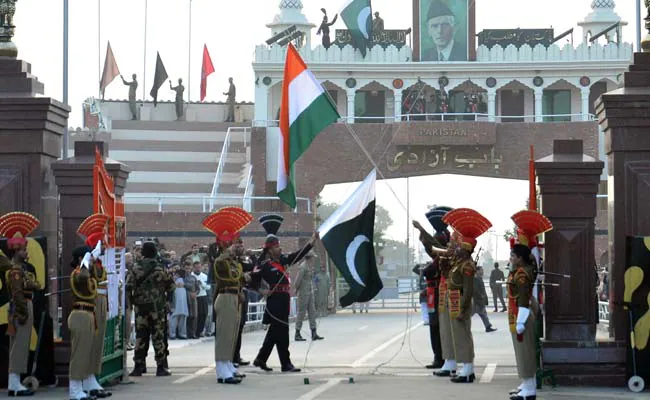
In a further escalation of measures, the Indian government has closed the Attari-Wagah border crossing, one of the last remaining formal points of entry and exit between the two countries. This move will severely disrupt cross-border travel, trade, and the movement of people, further isolating the two nations at a time when tensions are already running high.

Impact on Pakistanis in India

The closure of the Attari-Wagah border and the expulsion of Pakistani nationals are expected to affect thousands of Pakistani citizens residing in India for work, education, and family purposes. Pakistani diplomats and other personnel have been given similar instructions to leave within the 48-hour window.

This decision marks a significant deterioration in bilateral relations, recalling the earlier instances of military confrontations between the two nations following terror attacks in Uri (2016) and Pulwama (2019). In those cases, India responded with military strikes on Pakistani-administered territories, leading to further escalation.

Pakistan’s Response

In reaction to India’s actions, Pakistan has reportedly tightened its borders and placed its military on high alert. Pakistan’s Ministry of Foreign Affairs has condemned India’s decision, labeling it a “unilateral escalation” and a violation of international diplomatic norms.

A Tense Situation

The Pahalgam terror attack, attributed to Pakistani-based militant groups, has once again inflamed hostilities between India and Pakistan. While both nations possess nuclear capabilities, the current tensions have triggered fears of further violence or military escalation. Both governments have refrained from openly discussing military strikes thus far, but experts warn that the situation could quickly escalate into broader conflict if diplomatic efforts fail.

What Comes Next?

With the Attari-Wagah border closed, the Indus Waters Treaty suspended, and thousands of Pakistani nationals facing expulsion, the path ahead for India and Pakistan looks increasingly volatile. International pressure, especially from neighboring countries and global powers, could play a crucial role in preventing a full-blown crisis.

As both sides brace for further moves, the 48-hour ultimatum and the closure of the Attari-Wagah border serve as the latest chapter in the enduring India-Pakistan conflict, with no clear end in sight. Will this be the breaking point, or will diplomatic dialogue pave the way for a de-escalation?

Related stories:

Pakistan Shuts Airspace for Indian Flights, Suspends Trade, Cancels Visas

What Is the Indus Waters Treaty—And Why Is India Suspending It Now?

Previous Post

Pakistan Shuts Airspace for Indian Flights, Suspends Trade, Cancels Visas

Next Post

China Says Door for US Trade Talks ‘Wide Open’

News Desk

News Desk

Next Post
China Says Door for US Trade Talks ‘Wide Open’

China Says Door for US Trade Talks 'Wide Open'

  • Trending
  • Comments
  • Latest
Saudi Arabia Bans 1-Year Visit Visa for 14 Countries to Curb Illegal Hajj Pilgrims

Saudi Arabia Bans 1-Year Visit Visa for 14 Countries to Curb Illegal Hajj Pilgrims

February 4, 2025
Dublin’s Closed Israeli Embassy Becomes Palestinian Museum

Dublin’s Closed Israeli Embassy Becomes Palestinian Museum

December 27, 2024
Iraq 20 Years Later: What Really Happened and Who’s Still Accountable?

Iraq 20 Years Later: What Really Happened and Who’s Still Accountable?

March 21, 2025
Newly declassified U.S. documents show that the Dalai Lama was on CIA payroll

Newly declassified U.S. documents show that the Dalai Lama was on CIA payroll

November 28, 2025
“Arakan Army”: A Greater Threat Than the Junta and a Dead End for Rohingya Rights.

“Arakan Army”: A Greater Threat Than the Junta and a Dead End for Rohingya Rights.

3
Women in Afghan media continue brave mission to keep our stories alive

Women in Afghan media continue brave mission to keep our stories alive

1
Interview of Foreign Minister of Pakistan with Chinese Journalist

Interview of Foreign Minister of Pakistan with Chinese Journalist

0
Breakfast celebration in Turkish Embassy Islamabad

Breakfast celebration in Turkish Embassy Islamabad

0
How The New Taliban Code Dehumanizes Women

How The New Taliban Code Dehumanizes Women

February 13, 2026
Donald Trump and Goebbels with gifted nobel prizes.

Donald Trump Gifted Nobel Peace Prize

February 13, 2026
Mali Removes French Colonial History from Schools to Reclaim National Identity

Mali Removes French Colonial History from Schools to Reclaim National Identity

December 5, 2025
Iraq Increases Male Control Over Marriage, Divorce, and Custody

Iraq Increases Male Control Over Marriage, Divorce, and Custody

December 5, 2025

Recent News

How The New Taliban Code Dehumanizes Women

How The New Taliban Code Dehumanizes Women

February 13, 2026
Donald Trump and Goebbels with gifted nobel prizes.

Donald Trump Gifted Nobel Peace Prize

February 13, 2026
Mali Removes French Colonial History from Schools to Reclaim National Identity

Mali Removes French Colonial History from Schools to Reclaim National Identity

December 5, 2025
Iraq Increases Male Control Over Marriage, Divorce, and Custody

Iraq Increases Male Control Over Marriage, Divorce, and Custody

December 5, 2025

Observer Diplomat is a preeminent International Affairs and Diplomatic Magazine distinguished by its women-led editorial team. Committed to delivering in-depth analyses of global events, we offer a unique and nuanced perspective on international news. Our magazine serves as a beacon of knowledge, presenting a comprehensive understanding of the intricate dynamics shaping the world today.


REGIONS

  • Africa
  • Central Asia
  • China
  • East Asia & The Pacific
  • Europe
  • North America
  • Russia
  • South Asia

TOPICS

  • Diplomacy
  • Economy
  • Environment
  • Events
  • Opinion
  • Podcasts
  • Politics

ABOUT

  • Subscription
  • Newsletter
  • About Us
  • Write For Us
  • Privacy Policy
  • Advertise
  • Contact Us

Follow us

  • About
  • Advertise
  • Privacy & Policy
  • Contact

© 2023 observerdiplomat

No Result
View All Result
  • Home
  • Regions
    • US & Canada
    • China
    • Latin America & Caribbean
    • Middle East
    • Central Asia
    • South Asia
    • East Asia & The Pacific
    • Africa
    • Europe
  • Topics
    • Opinion
    • Society
    • Security
    • Economy
    • Diplomacy
    • Politics
    • Environment
  • More
    • National Days
    • Podcasts
    • Interviews
    • Books and Reviews
    • Heads of Mission In Pakistan
    • Events
  • Magazine
  • About
    • Subscription
    • Newsletter
    • About Us
    • Write For Us
    • Advertise
    • Privacy Policy
    • Contact Us

© 2023 observerdiplomat