Friday, April 24, 2026
Observer Diplomat
  • Home
  • Regions
    • US & Canada
    • China
    • Latin America & Caribbean
    • Middle East
    • Central Asia
    • South Asia
    • East Asia & The Pacific
    • Africa
    • Europe
  • Topics
    • Opinion
    • Society
    • Security
    • Economy
    • Diplomacy
    • Politics
    • Environment
  • More
    • National Days
    • Podcasts
    • Interviews
    • Books and Reviews
    • Heads of Mission In Pakistan
    • Events
  • Magazine
  • About
    • Subscription
    • Newsletter
    • About Us
    • Write For Us
    • Advertise
    • Privacy Policy
    • Contact Us
No Result
View All Result
  • Home
  • Regions
    • US & Canada
    • China
    • Latin America & Caribbean
    • Middle East
    • Central Asia
    • South Asia
    • East Asia & The Pacific
    • Africa
    • Europe
  • Topics
    • Opinion
    • Society
    • Security
    • Economy
    • Diplomacy
    • Politics
    • Environment
  • More
    • National Days
    • Podcasts
    • Interviews
    • Books and Reviews
    • Heads of Mission In Pakistan
    • Events
  • Magazine
  • About
    • Subscription
    • Newsletter
    • About Us
    • Write For Us
    • Advertise
    • Privacy Policy
    • Contact Us
No Result
View All Result
Observer Diplomat
No Result
View All Result
Home Diplomacy

Pakistan PM set to visit China to revitalize CPEC

News Desk by News Desk
June 3, 2024
in Diplomacy, South Asia
0
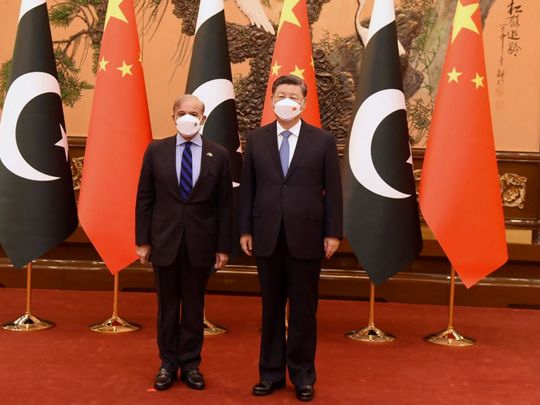
Pakistan PM set to visit China to revitalize CPEC
Share on FacebookShare on Twitter

Pakistan’s Prime Minister Shehbaz Sharif is set to visit China on June 4 for a five-day trip aimed at revitalizing the $62 billion China-Pakistan Economic Corridor (CPEC), a key part of China’s Belt and Road Initiative. The visit comes at a critical time as Pakistan grapples with high inflation, a debt crisis, and a stagnant economy. Sharif’s itinerary includes meetings in Beijing, Xi’an, and Shenzhen, reflecting China’s significant economic rise and its potential as a model for Pakistan. Launched in 2015, CPEC was envisioned as a transformative project for Pakistan, encompassing the construction of a seaport in Gwadar, power plants, and road networks. Despite initial successes, the project has faced numerous hurdles, including political instability, economic challenges, and security threats. Pakistan’s recent government is now making efforts to rejuvenate CPEC and capitalize on its potential benefits. Pakistan’s economic situation is dire, with nearly 40% of its 241 million people living below the poverty line. Inflation remains high, and a large portion of the population believes their economic situation will worsen. The CPEC, introduced during Nawaz Sharif’s tenure to address an electricity crisis, has delivered some infrastructure and energy projects but has fallen short in translating these into broader economic growth.

CPEC’s original plan included the development of nine Special Economic Zones (SEZs) to stimulate growth, but none have been completed. The project was also expected to create over two million jobs, but less than 250,000 have materialized so far. Meanwhile, Pakistan’s debt has soared, with external debt nearly doubling from $59.8 billion in 2013 to $124 billion today, a significant portion owed to China. Despite these challenges, the Pakistani government is pushing to enhance CPEC. However, China’s patience is wearing thin due to security concerns. Attacks on Chinese nationals working on CPEC projects have been frequent, particularly in Balochistan, where rebels view the projects as exploitative. These incidents have strained the mutual trust between the two nations. Former CPEC Authority head Khalid Mansoor asserts that China remains committed to the project but demands improved security. Stella Hong, a postdoctoral fellow at the Harvard Kennedy School, emphasizes that Pakistan’s security situation is a significant concern for China, impacting future investments. The violent incidents have tested the trust between the two governments, with both sides harboring reservations about each other’s commitment. Governance issues further complicate the relationship. Ammar Malik from AidData notes that Chinese partners often complain about inadequate support from Pakistan, hindering their work. Hong concurs, suggesting that Pakistan needs to improve its business environment to attract Chinese companies. Economist Safdar Sohail, involved in CPEC’s initial implementation, believes the Special Investment Facilitation Council (SIFC) could address governance issues. Formed by Shehbaz Sharif, the SIFC includes top civilian and military officials and aims to streamline economic decision-making. Sohail stresses the need for a forward-looking approach to fully leverage CPEC’s potential, rather than short-term projects that increase debt. Reviving CPEC will require significant improvements in security, governance, and long-term planning to realize its transformative potential for Pakistan’s economy.

As Sharif prepares for his crucial visit to China, the stakes are high. Success in rejuvenating CPEC could provide a much-needed boost to Pakistan’s struggling economy. However, achieving this will depend on addressing the longstanding issues that have plagued the project and fostering a stronger, more reliable partnership with China. Sharif’s trip to China represents a pivotal moment for CPEC’s future. Both nations must navigate their mutual concerns and collaborate effectively to ensure that this ambitious project can deliver on its promise of economic revitalization for Pakistan.

Previous Post

51st Saudi Relief Plane Arrives in Egypt with Aid for Gaza

Next Post

US Seeks UN Support for Gaza Ceasefire Deal

News Desk

News Desk

Next Post
US Seeks UN Support for Gaza Ceasefire Deal

US Seeks UN Support for Gaza Ceasefire Deal

  • Trending
  • Comments
  • Latest
Saudi Arabia Bans 1-Year Visit Visa for 14 Countries to Curb Illegal Hajj Pilgrims

Saudi Arabia Bans 1-Year Visit Visa for 14 Countries to Curb Illegal Hajj Pilgrims

February 4, 2025
Dublin’s Closed Israeli Embassy Becomes Palestinian Museum

Dublin’s Closed Israeli Embassy Becomes Palestinian Museum

December 27, 2024
Iraq 20 Years Later: What Really Happened and Who’s Still Accountable?

Iraq 20 Years Later: What Really Happened and Who’s Still Accountable?

March 21, 2025
Newly declassified U.S. documents show that the Dalai Lama was on CIA payroll

Newly declassified U.S. documents show that the Dalai Lama was on CIA payroll

November 28, 2025
“Arakan Army”: A Greater Threat Than the Junta and a Dead End for Rohingya Rights.

“Arakan Army”: A Greater Threat Than the Junta and a Dead End for Rohingya Rights.

3
Women in Afghan media continue brave mission to keep our stories alive

Women in Afghan media continue brave mission to keep our stories alive

1
Interview of Foreign Minister of Pakistan with Chinese Journalist

Interview of Foreign Minister of Pakistan with Chinese Journalist

0
Breakfast celebration in Turkish Embassy Islamabad

Breakfast celebration in Turkish Embassy Islamabad

0
How The New Taliban Code Dehumanizes Women

How The New Taliban Code Dehumanizes Women

February 13, 2026
Donald Trump and Goebbels with gifted nobel prizes.

Donald Trump Gifted Nobel Peace Prize

February 13, 2026
Mali Removes French Colonial History from Schools to Reclaim National Identity

Mali Removes French Colonial History from Schools to Reclaim National Identity

December 5, 2025
Iraq Increases Male Control Over Marriage, Divorce, and Custody

Iraq Increases Male Control Over Marriage, Divorce, and Custody

December 5, 2025

Recent News

How The New Taliban Code Dehumanizes Women

How The New Taliban Code Dehumanizes Women

February 13, 2026
Donald Trump and Goebbels with gifted nobel prizes.

Donald Trump Gifted Nobel Peace Prize

February 13, 2026
Mali Removes French Colonial History from Schools to Reclaim National Identity

Mali Removes French Colonial History from Schools to Reclaim National Identity

December 5, 2025
Iraq Increases Male Control Over Marriage, Divorce, and Custody

Iraq Increases Male Control Over Marriage, Divorce, and Custody

December 5, 2025

Observer Diplomat is a preeminent International Affairs and Diplomatic Magazine distinguished by its women-led editorial team. Committed to delivering in-depth analyses of global events, we offer a unique and nuanced perspective on international news. Our magazine serves as a beacon of knowledge, presenting a comprehensive understanding of the intricate dynamics shaping the world today.


REGIONS

  • Africa
  • Central Asia
  • China
  • East Asia & The Pacific
  • Europe
  • North America
  • Russia
  • South Asia

TOPICS

  • Diplomacy
  • Economy
  • Environment
  • Events
  • Opinion
  • Podcasts
  • Politics

ABOUT

  • Subscription
  • Newsletter
  • About Us
  • Write For Us
  • Privacy Policy
  • Advertise
  • Contact Us

Follow us

  • About
  • Advertise
  • Privacy & Policy
  • Contact

© 2023 observerdiplomat

No Result
View All Result
  • Home
  • Regions
    • US & Canada
    • China
    • Latin America & Caribbean
    • Middle East
    • Central Asia
    • South Asia
    • East Asia & The Pacific
    • Africa
    • Europe
  • Topics
    • Opinion
    • Society
    • Security
    • Economy
    • Diplomacy
    • Politics
    • Environment
  • More
    • National Days
    • Podcasts
    • Interviews
    • Books and Reviews
    • Heads of Mission In Pakistan
    • Events
  • Magazine
  • About
    • Subscription
    • Newsletter
    • About Us
    • Write For Us
    • Advertise
    • Privacy Policy
    • Contact Us

© 2023 observerdiplomat